If you have found a spelling error, please, notify us by selecting that text and pressing Ctrl+Enter.
Curiosities of ancient Rome
The world of the ancient Romans was rich in extraordinary, and sometimes even surprising, facts. We draw our knowledge of Roman daily life, customs, and mentality primarily from works left by ancient writers and historians. It is thanks to them that we discover information that is astonishing today – sometimes even hard to believe. Below are some interesting facts that reveal a lesser-known and less obvious side of the Roman world.
I encourage you to submit your own suggestions and to report any corrections or inaccuracies.
Artabanus’ letter to Tiberius
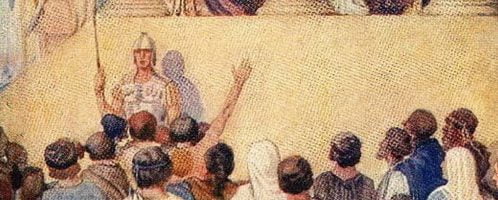
The reign of Tiberius (14-37 CE) was for ordinary people in the provinces a period of peace and good state management, but for the spheres of the Roman aristocracy, a time of increasing tyranny and terror. This was largely due to the influence at the Roman court achieved by Sejanus – the praetorian prefect – who sought to seize power and surrounded himself with trusted people.

Grand Theater in Ephesus – before and after excavations
Comparison of the 2,300-year-old Grand Theater in Ephesus (Turkey) – before and after the excavations.

Cabbage goo – drug of Cato
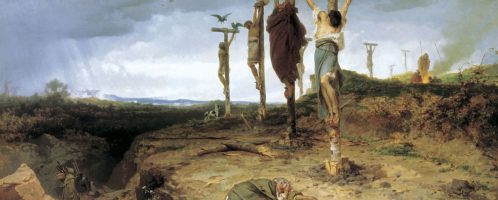
Cato the Elder, author of the work De agri cultura, recommended the use of cabbage to compress wounds, swelling, burns and even bone dislocations. In turn, for arthritis, he recommended chopped, raw cabbage mixed with coriander and cured cabbage mixed with vinegar and honey.

Black stone from Emessa
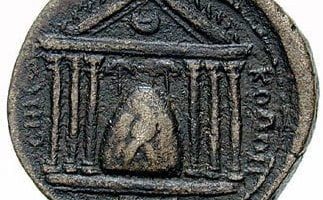
Elagabalus was less than fourteen years old when he ascended the throne on May 16, 218 CE. Lost, he sought support from a god – El Gabal, whom he had served until recently. He brought from Emessa the black stone symbolizing Baal (most likely a piece of a meteorite; Herodian mentions that it “fell from heaven”) and made sacrifices before him, killing sheep and cows with his own hands.
Roman amulet with phallus
Roman amulet made of an antler base with a carved phallus. The object was found in the area of the former Roman camp where the II Augusta legion was stationed; in Caerleon (Wales).

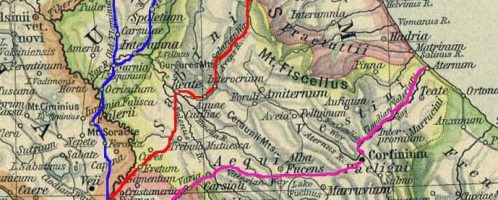
Via Salaria – Roman road
Via Salaria (literally “the salt road”) is one of the oldest roads in Italy and is even older than the Eternal City itself. The 242 km long road connected the capital of the Empire with the Adriatic Sea.
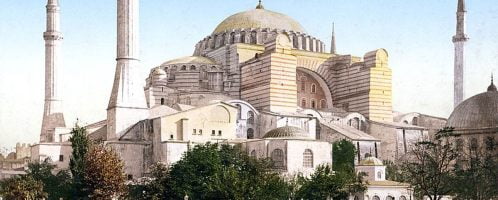
Why do we learn so little about Byzantine history at school?
The Byzantine Empire was a continuation of the Eastern Roman Empire, which was created as part of the division of the Roman Empire in 395 CE, on the initiative of Emperor Theodosius I. It was also thanks to this ruler that Christianity became a state religion that began to have an increasing influence on the centre of power. The fall of Rome in 476 CE and the return of the insignia of power to Constantinople meant that the continuity of the Roman state was based only on the emperors from the east.
Roman duralex
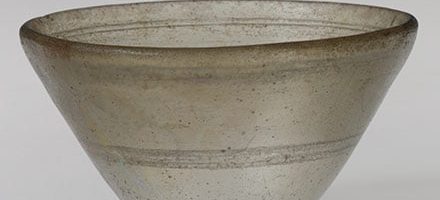
Behind Emperor Tiberius, the “duralex“, non-fading glass was invented. Flexible glass (vitrum flexile) is a legendary, forgotten discovery that was lost during the reign of Emperor Tiberius (14-37 CE).