If you have found a spelling error, please, notify us by selecting that text and pressing Ctrl+Enter.

Curiosities of ancient Rome

The world of the ancient Romans was rich in extraordinary, and sometimes even surprising, facts. We draw our knowledge of Roman daily life, customs, and mentality primarily from works left by ancient writers and historians. It is thanks to them that we discover information that is astonishing today – sometimes even hard to believe. Below are some interesting facts that reveal a lesser-known and less obvious side of the Roman world.

I encourage you to submit your own suggestions and to report any corrections or inaccuracies.

Cleopatra tried to cure Caesar’s baldness

Cleopatra tried to heal baldness of Julius Caesar. The famous Roman physician Galen (2nd century CE) claimed that Cleopatra recommended a paste of burned mice, rags, horse’s teeth for this condition; bear fat; deer marrow and reed stalks. The ingredients were to be used in equal proportions, mixed with honey and rubbed on the head.

Julius Caesar

Roman-Carthaginian relations before Punic Wars

There is much talk about the Punic Wars that took place between the Roman Republic and Carthage, also known as Kart Hadasht, or the city of Dido. In the years 264-146 BCE, there were three conflicts between these ancient powers which led to Rome defeating and absorbing its rival. Before that, however, both sides were not hostile to each other, and even on the contrary – they were in good relations.

Carthage ruins

Cato the Younger method to save wealth

Cato the Younger, a Roman politician from the 1st century BCE, fearing losing the enormous wealth he had with him, amounting to seven thousand silver talents, figured out a way to secure his belongings on a long sea voyage. In ancient times, a boat trip across the sea was always risky, especially in winter or in the open sea. However, due to the speed of the ship compared to land transport and the possibility of taking more belongings, many people decided to take such a step.

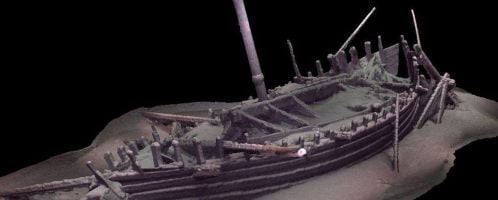
Roman ship wreck

Don’t lie to Roman woman

In ancient Rome, it was allowed passive participation of senatorial sons in the deliberations of the senate, which was also part of the educational program. Of course, they were to be kept secret.

Portrait of a Roman woman, Jean-Léon Gérôme

Roman fresco showing daily expenses

We learn a lot about the expenses of ordinary citizens of course from Pompeii. It was there in one of the houses that the Roman “graffiti” survived; the resident calculates his expenses on the wall for the next five days (prices in asses).

Roman fresco showing the sale of bread in the market

Roman tombstone with humorous dialogue

Interesting information was left by the Roman tombstone of Lucius Calidius Eroticus and his wife Fannia Voluptatis. The object was found in Isernia, in southern Italy, and dates back to the 1st-2nd century CE.

Roman tombstone with humorous dialogue

Antique gold-plated and silver-plated mirror

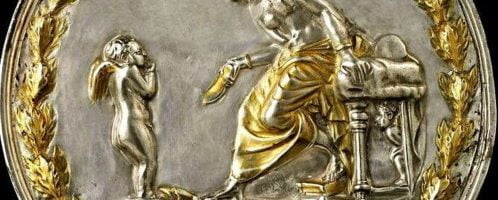
Antique gold-plated and silver-plated mirror from the 2nd-1st century BCE. The object sold for $ 116.500. There is a relief on the object showing Aphrodite, who is going to punish Eros with a sandal for breaking a vessel lying on the ground.

Antique gold-plated and silver-plated mirror

Mullet – delicacy of ancient Romans

As reported by Pliny the Elder1, who lived in the middle of the 1st century CE, one of the most eaten fish among the ancient Romans was the red mullet. As he himself points out, the fish has a “double beard” (mullus barbatus) and is not suitable for breeding, and the best specimens can be found in open waters.

Mullet on the Roman mosaic

Spelling error report

The following text will be sent to our editors: