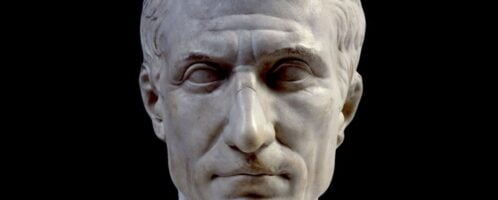
Marcus Aurelius as young man
Roman marble bust showing Marcus Aurelius as a youth. Object dated to the 2nd century CE.
If you have found a spelling error, please, notify us by selecting that text and pressing Ctrl+Enter.
The world of the ancient Romans was rich in extraordinary, and sometimes even surprising, facts. We draw our knowledge of Roman daily life, customs, and mentality primarily from works left by ancient writers and historians. It is thanks to them that we discover information that is astonishing today – sometimes even hard to believe. Below are some interesting facts that reveal a lesser-known and less obvious side of the Roman world.
I encourage you to submit your own suggestions and to report any corrections or inaccuracies.
Roman marble bust showing Marcus Aurelius as a youth. Object dated to the 2nd century CE.

In the garden of Villa Bonanno, in the centre of Palermo (the capital of Sicily; ancient Panormus), there are remains of a Roman villa (Resti di Villa Romana) or even two – as I have read. Unfortunately, the place is fenced and there is no more information about the place. From behind the fence, you can see well-preserved floor mosaics.

In the northern part of the Lilybaeum Archaeological Park (Marsala, western Sicily) are the remains of a large Roman villa. The building was built on the ruins of older buildings and it is possible that the villa could have been built after the devastating earthquake that struck the region in 365 CE.

Laudatio Iuliae amitae was a funeral speech given by Julius Caesar in 68 BCE in honour of his deceased aunt Julia (wife of Gaius Marius). The beginning of Caesar’s laudation (laudatio funebris) was preserved in the work of Suetonius, in which he praised the origin of the family.
Temple of the Dioscuri (Castor and Pollux) in Agrigento was built in the middle of the 5th century BCE. The preserved four columns prove that they were made in the Doric order. The building had six columns on both sides; of the other two, thirteen.

Parricidia, was one of the most serious crimes in Roman criminal law. The term was used to refer to the killing of relatives.