
Roman fresco of young woman from Serbia
Roman fresco of a young woman from Serbia that dates back to the 4th century CE. The object comes from a pagan grave that was discovered in eastern Serbia – the city of Kostolac (ancient Viminacium).
If you have found a spelling error, please, notify us by selecting that text and pressing Ctrl+Enter.
The world of the ancient Romans was rich in extraordinary, and sometimes even surprising, facts. We draw our knowledge of Roman daily life, customs, and mentality primarily from works left by ancient writers and historians. It is thanks to them that we discover information that is astonishing today – sometimes even hard to believe. Below are some interesting facts that reveal a lesser-known and less obvious side of the Roman world.
I encourage you to submit your own suggestions and to report any corrections or inaccuracies.
Roman fresco of a young woman from Serbia that dates back to the 4th century CE. The object comes from a pagan grave that was discovered in eastern Serbia – the city of Kostolac (ancient Viminacium).
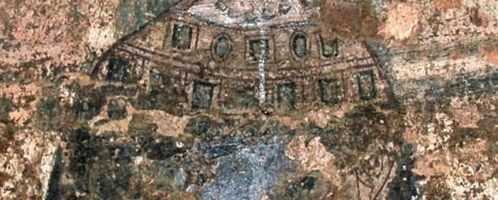
Model of Porta Nigra (“Black Gate”) and Roman fortifications with a photo of the preserved gate. The monument is located in Trier (Roman Augusta Trevorum) in West Germany.

A wonderful Roman ring made of gold, amethyst and emerald. Object dated to the 3rd-4th century CE.

Made of ivory Roman foot in sandal. Object dated to the late 1st century BCE or early 1st CE.

Roman “magic” amulet, made of stone – yarrow. Object dated to the 2nd-3rd century CE.

In 294 CE king of Persia – Narseh, son of the great Shapur I, led a surprise invasion of the Roman Empire. Galerius in the office of Caesar, with the help of smaller forces, delayed the Sassanid attack while awaiting the arrival of Augustus’ reinforcements Diocletian.

The only such well-preserved Roman oil lamp that has ever been found in Great Britain. Dated on the 1st-3rd century CE. Located in the Ipswich Museum.

Roman glass bottle, dating from the 1st century CE.


