If you have found a spelling error, please, notify us by selecting that text and pressing Ctrl+Enter.

Curiosities of ancient Rome

The world of the ancient Romans was rich in extraordinary, and sometimes even surprising, facts. We draw our knowledge of Roman daily life, customs, and mentality primarily from works left by ancient writers and historians. It is thanks to them that we discover information that is astonishing today – sometimes even hard to believe. Below are some interesting facts that reveal a lesser-known and less obvious side of the Roman world.

I encourage you to submit your own suggestions and to report any corrections or inaccuracies.

Lyon Tablet – speech of Claudius

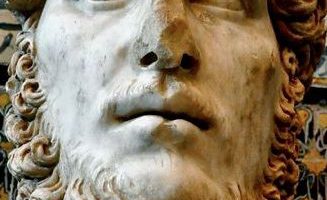
A so-called “Lyon Tablet” is a preserved bronze plaque on which the words of the speech given by Emperor Claudius (41-54 CE) before the Senate in Rome during the year 48 CE were placed. It was a proposal to recognize Roman citizens from distant Gaul as worthy of admission to the senatorial state, after achieving an appropriate level of wealth.
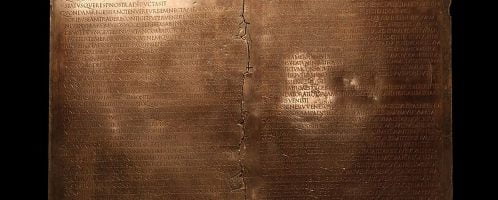
Lyon Tablet - speech of Claudius

Good wishes from the legionary’s camp

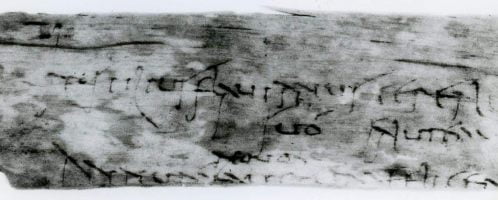
This is a fragment in Latin of a letter from Hostilius Flavianus to Flavius Cerialis, the IX Cohort commanding officer of Batavians stationed at a legionaries’ camp by Hadrian’s wall in about 100-105 CE. He wishes him “a fortunate and happy New Year”.

Good wishes from the legionary's camp

Legal position of women in Rome

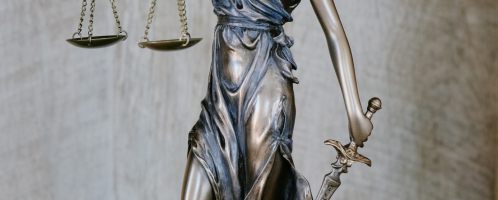
What was the legal position of women in ancient Rome? Books on Roman law, including, Witold Wołodkiewicz’s “Prawo rzymskie, Słownik Encyklopedyczny” provide many interesting facts about the rights and obligations that have changed over the centuries and concerned various groups.

Justice

Roman baths in Serbia

Remains of a Roman public baths in the Serbian town of Čačak. The bathhouse had several rooms, swimming pools with hot and cold water and a hypocaustum – a floor and wall heating system.

Roman baths in Serbia

Reconstruction of nymphaeum in Amman

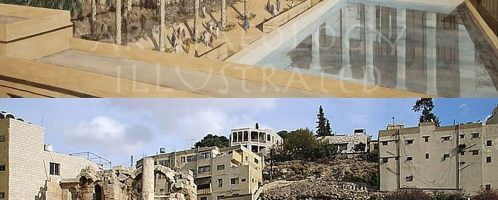
Reconstruction of the nymphaeum in Amman (Jordan), which was built in the 2nd century CE. It was a complex of fountains and pools for the worship of Nymphs. Researchers believe that the nymphaeum had a 600 square meter swimming pool, three meters deep. The building was a characteristic element of ancient cities and was often located in a representative place.

Reconstruction of nymphaeum in Amman

Iberia or Iberia?

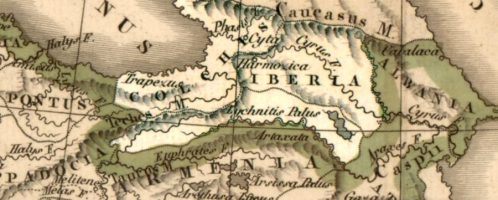
Today’s area of ​​Spain and Portugal is known as the Iberian Peninsula, or simply – Iberia. This name was known in antiquity. However, in those days it also applied to a region almost four thousand kilometres away – modern Georgia…

Colchis and Iberia in the 4th-3rd century BCE - shown on a map from 1833 by Félix Delamarche

Spelling error report

The following text will be sent to our editors: