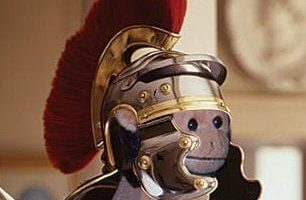
Roman theater mask
Roman theater mask, located in the Roman-Germanic Museum in Cologne (Germany).
If you have found a spelling error, please, notify us by selecting that text and pressing Ctrl+Enter.
The world of the ancient Romans was rich in extraordinary, and sometimes even surprising, facts. We draw our knowledge of Roman daily life, customs, and mentality primarily from works left by ancient writers and historians. It is thanks to them that we discover information that is astonishing today – sometimes even hard to believe. Below are some interesting facts that reveal a lesser-known and less obvious side of the Roman world.
I encourage you to submit your own suggestions and to report any corrections or inaccuracies.
Roman theater mask, located in the Roman-Germanic Museum in Cologne (Germany).

Caligula was famous – according to ancient sources – for his unstable behavior. I.e. when during the games the crowd supported another team than the Emperor Caligula, he was supposed to say: “Would that the Roman people had but one neck”.

Reconstruction of a Roman mill used for the production of olive oil – known as trapetum. The machine consisted of a large bowl (mortarium), into which olives were falling, which then were crumpled by two half-round stones (orbes).

Nero often participated in the Olympic Games as a charioteer. During one of them he even carried a chariot drawn by ten horses. It did not matter to him that earlier he had criticized king Mithridates for exactly the same, claiming that just king wanted to show off. During the race, Nero dropped from the chariot and the servants had to help him get back to the platform.

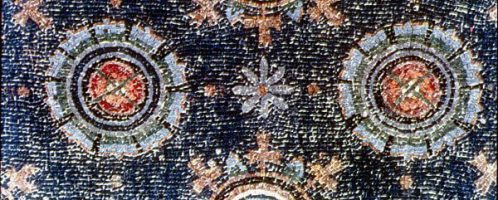
Roman beautiful geometric mosaic-work from Ravenna (Italy). Object located in Mausoleum of Galla Placidia.
Nero at the funeral of his second wife Poppea Sabina ordered to burn all-year production of Arabic incense. Interestingly, the ruler himself killed pregnant empress, whom he kicked in the stomach.

Roman sculpture made of carnelian or agate showing unknown emperor. The person wears a lion skin. Object found in Geresa (Jordan) and dates back to II-IV century CE.

Elian Claudius, a Roman writer and rhetoric teacher who lived in the times of Septimius Severus, noticed that if someone is wearing a shoe, the animal behaves exactly the same. Hunters wanting to catch an animal used a trick.