
Nero loved to perform as Hercules
Apparently, Nero loved to perform as famous hero Hercules. His opponent was to be a lion, who was prepared and trained in such a way that the naked ruler could kill him with one blow of a club or by suffocation.
If you have found a spelling error, please, notify us by selecting that text and pressing Ctrl+Enter.
The world of the ancient Romans was rich in extraordinary, and sometimes even surprising, facts. We draw our knowledge of Roman daily life, customs, and mentality primarily from works left by ancient writers and historians. It is thanks to them that we discover information that is astonishing today – sometimes even hard to believe. Below are some interesting facts that reveal a lesser-known and less obvious side of the Roman world.
I encourage you to submit your own suggestions and to report any corrections or inaccuracies.
Apparently, Nero loved to perform as famous hero Hercules. His opponent was to be a lion, who was prepared and trained in such a way that the naked ruler could kill him with one blow of a club or by suffocation.

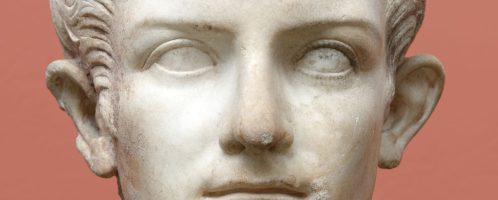
When the Roman emperor Caligula asked one of the exiles, what he was doing in exile, he replied that all this time he had prayed for death of Tiberius and ascending the throne of Caligula. The Emperor, after a moment of reflection, decided to send his agents over the islands to murder all those whom he sentenced to exile during his reign.
Etruscan bronze mirror from Italy inscribed with a scene with a soothsayer.

Suetonius indicates that the emperor Caligula was heavily mentally unbalanced. Apparently, the ruler was very worried about the fact that under his rule there was no great tragedy that would have gone down in history.

Slavery was a practice commonly used and accepted in the ancient and especially Roman world. Christianity, by nature, directed at doing good things to the other people, had different attitude. Saint Augustine also had his opinion.

Roman marble cinerary urn of Baebia Satyra and M. Catonius Threptus. Object dated back to late 1st century CE.

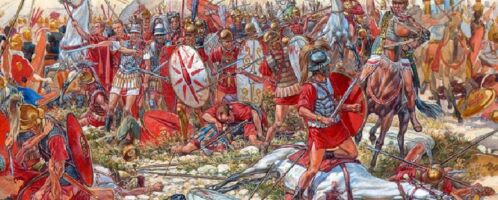
After the tragic defeat of the Romans at Cannae in 216 BCE Rome was so deprived of recruits that there were even enlisted slaves to the army. They were called voluntarii or volones.
Roman bronze balsamarium with silver inlays. Object dated back to 2nd-3rd century CE.

Marcus Cornelius Fronto, teacher of the emperor Antoninus Pius, Marcus Aurelius and Lucius Verus, came from the province of Numidia in northern Africa. His ancestors were probably the Italian settlers, but as he said about himself, he was a “Libyan born of Libyan nomads”.

