If you have found a spelling error, please, notify us by selecting that text and pressing Ctrl+Enter.

Curiosities of ancient Rome (Unknown facts)

Unknown Facts are curiosities revealing little-known, surprising, or rarely discussed information from the world of ancient Rome and antiquity. This category includes unusual details, curiosities, and facts that offer a less obvious perspective on the Roman Empire.

Basic moral values of ancient Romans

During the republic, in the 2nd century BCE have developed and fully formed the basic moral values of the ancient Romans. The most important feature was virtus (virtue). It meant a behaviour worthy of a real man (vir), according to the rules of law and honour, the ability to distinguish what is good from what is bad. It is also “setting boundaries and restraint to your desires”, as Gaius Lucilius – a friend of Scipio Aemilianus wrote.
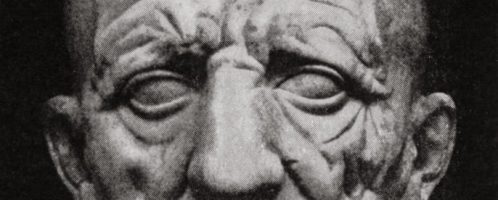
A bust of an elderly man - the so-called patrician Torlonia. Dated to the  1st century CE

The last Roman

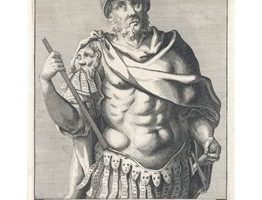
“The Last Roman” is a colloquial term used in historical journalism to describe a character who is considered the last representative of ancient culture and ancient Roman virtues in the face of the end of the age and progressive barbarization. The term comes from the work of Cremutius Cordius, a Roman historian who, being the advocate of the republican system, called “the last Romans” (ultimus Romanorum) of Mark Brutus and Cassius – the killers of Julius Caesar.

Aetius

Beautiful words of Marcus Aurelius

Marcus Aurelius, Roman emperor in the years 161-180 CE, was one of the most eminent and best educated Roman emperors. Because of his unusual interest in philosophy, he was called a “philosopher on the throne”. Many of his thoughts have survived to our times, which we can find in his “Meditations”. One of the most beautiful is the following.

Marcus Aurelius

Hibernia – Roman Ireland

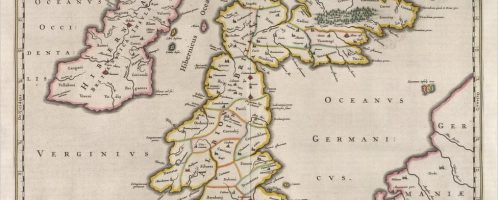
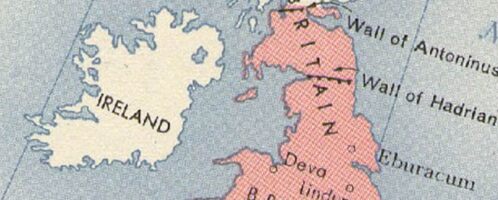
Hibernia is the Latin name of Ireland (also known as Britannia Hibernia), given to it by the Romans. The Roman name was transformed into Hibernia because of its similarity to the word hibernus – “winter”.

Map of the British Isles from 1654 with Hibernia

Great gladiators

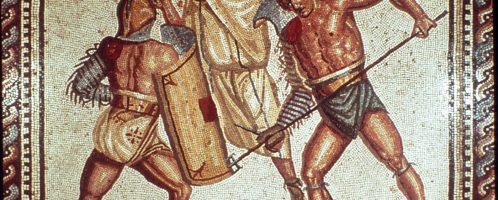
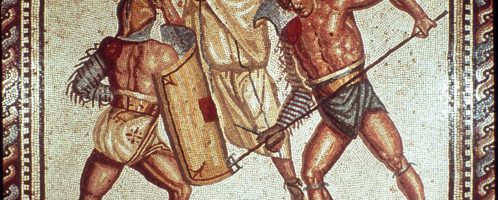
Gladiators enjoyed great fame – we know some of them by name thanks to Roman writers. Martialis, a Roman poet, mentions in his poem a man named Hermes, who specialized in wielding all types of weapons and his spectacular fights “brought” crowds to the stands of the amphitheaters.

Roman mosaic showing fight of gladiators

Britain – island!

Julius Agricola, a Roman commander from the 1st century CE, significantly contributed to Roman expansion in Britain and broke the strength of the Caledonian tribes for a generation. After the victorious battle of Mons Graupius Agricola gave the prefect of the fleet an order to sail along the coasts to the north, which made it clear that Britain was an island.

Roman Britain

Spelling error report

The following text will be sent to our editors: