If you have found a spelling error, please, notify us by selecting that text and pressing Ctrl+Enter.

Remnants of end of world

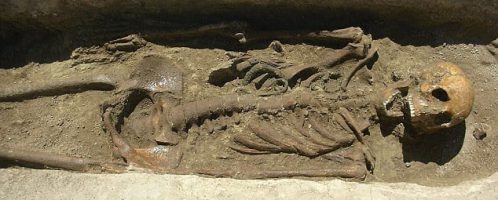
A team from the Italian Archaeological Mission in Luxor (MAIL), in 2015, discovered bodies covered with a thick layer of lime. Lime has been used since antiquity as a disinfectant. The researchers found the find during excavations at the Harwa and Akhimenru funerary complex on the western edge of the ancient city of Thebes (now Luxor).
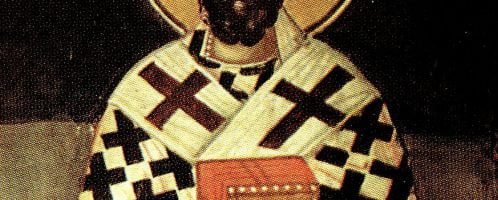
Saint Cyprian

Statue of Hadrian was discovered in Turkey

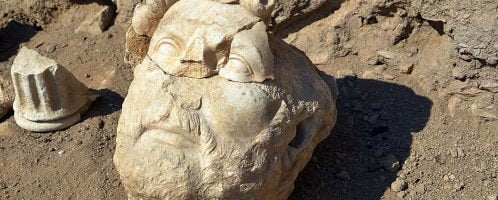
In September, information appeared that in the ancient city of Alabanda (near Çine, in the west of Turkey), during the ongoing excavations, a statue of Hadrian was discovered in fragments.

Scientists suspect that the image of the emperor was immortalized in connection with his visit to the city in 120 CE. The statue could be two and a half meters high and, according to archaeologists, it was probably destroyed by Christians in the following years.

Statue of Hadrian was discovered in Turkey

Reconstruction 3D of Ostia

Ostia Antica was a Roman port, the ruins of which, preserved to this day, are among the largest in terms of area in Italy. It has now been calculated that the remains of the colony can be found in the area of ​​5 hectares.

Reconstruction 3D of Ostia

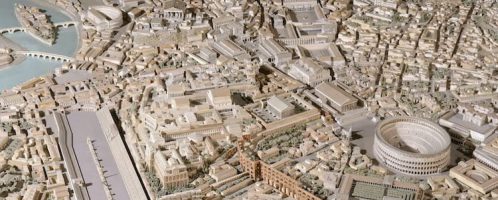
Huge model of Rome from the 4th century took about 35 years

A huge model of Rome from the 4th century CE (the so-called Plastico di Roma Imperiale) is the work of the archaeologist and architect Italo Gismondi, who worked on it for a large part of his life (1935-1971). In his work, Gismondi partly used the work of Rodolfo Lanciani – the map Forma Urbis from 1901.

Huge model of Rome from the 4th century took about 35 years

Spelling error report

The following text will be sent to our editors: