If you have found a spelling error, please, notify us by selecting that text and pressing Ctrl+Enter.

Articles

Roman state existed for nearly thirteen centuries, repeatedly exerting a profound influence on the course of history. I present the history of ancient Rome in the individual articles below, which not always refer solely to the Eternal City itself but encompass the wider world of the Roman Empire.

I encourage you to submit your own articles and to report any corrections or factual inaccuracies.

Roman war fleet

The construction of the ship began with the construction of the hull plating from boards, usually pine. Then a light skeleton was placed inside and the whole structure was reinforced with thick ropes. Boards were connected with specially hewn pins or grooves, practically no nails or other metal fasteners were used.
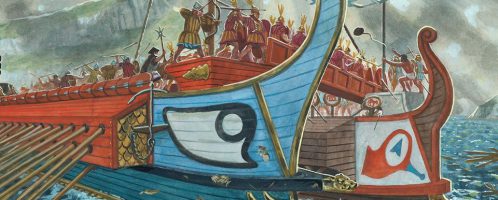
Clash of the roman fleet | Photo: Giuseppe Rava from Osprey's book, The  Ships of Republican Rome

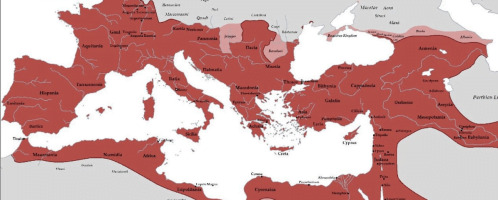
Roman Empire at time of its greatest prosperity

Roman Empire, expanding from the 3rd century BCE to the 5th century CE, was one of the few in ancient history that covered such a huge area. It is also sometimes called a world state for this reason. In the first and second centuries, the Romans ruled huge areas around the Mediterranean Sea. This huge state can only be compared with the Chinese state during the Han dynasty (202 BCE 220 CE) and the former state of Emperor Szy-Huang-Ti.

Roman Empire in 117 CE, At the end of Trajan's reign, Rome reached its peak territorial extent.

Copper coinage, i.e. ancient chronology

The division of time into two eras is widely known and is not controversial. When subjected to a critical analysis, a range of questions and doubts arise that I would like to present in this article.

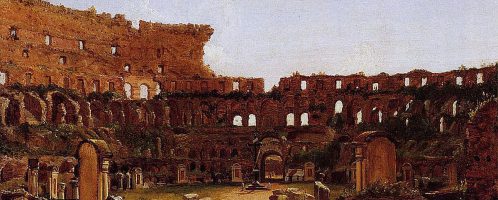
Thomas Cole, Interior of the Colosseum

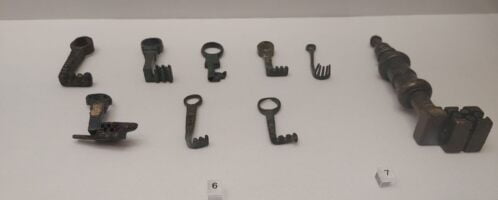
Keys and locks in ancient Rome

Hardly anyone wonders how the ancients once closed their homes, chests or cells. As it turns out, a modern key or lock is an ancient invention. For example, castles made of strong wood were already used in Egypt or Greece. However, most of the locksmith’s “patents” come from Rome, which largely took over knowledge from the Etruscans.

Different types of Roman keys

Year of the Four Emperors

The despotism of Nero caused growing dissatisfaction. The reign of Nero is stuck in the consciousness of his people today as a period of exceptional decline in morality, the oppression of society, and the eccentric pranks of the emperor. From a person sensitive to beauty, poetry, and theatre, he became a vain lust.

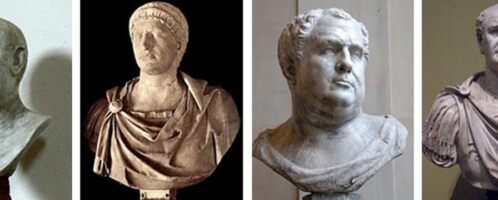
Rivals to imperial power: Vitellius, Otho, Vespasian and Galba

10 places where we can see unique Roman mosaics

Mosaics were very popular in the Roman Empire. From the colorful, marble (or glass cubes) squares various patterns were laid on the floors or walls. Many beautiful ancient compositions have been preserved to our day, which prove the craftsmanship of ancient craftsmen. Below 10 places where we will see some of the most beautiful Roman mosaics.

Mosaic of Neptune on his sea chariot - located in the Archaeological  Museum of Sousse

Year of the Five Emperors

Year 193 CE is known in the history of ancient Rome as The Year of Five Emperors, because during these 365 days as many as five claimants claimed the throne. This year also brought the fall of the current Antonin dynasty (96 – 192 CE) and the beginning of the four-year period of civil wars (193 – 197 CE), which eventually ended with the victory of Septimius Severus.

Year of the Five Emperors

Spelling error report

The following text will be sent to our editors: