If you have found a spelling error, please, notify us by selecting that text and pressing Ctrl+Enter.
Articles
Roman state existed for nearly thirteen centuries, repeatedly exerting a profound influence on the course of history. I present the history of ancient Rome in the individual articles below, which not always refer solely to the Eternal City itself but encompass the wider world of the Roman Empire.
I encourage you to submit your own articles and to report any corrections or factual inaccuracies.
How did Octavian Augustus introduce rule of military dictatorship under form of republic?
Octavian Augustus, heir and principal heir of the dictator Julius Caesar, led to another civil war in the result of which removed all rivals to full power. The year 27 BCE is officially recognized as the beginning of the existence of a new type of government (Empire) in the Roman state, which, however, was still officially called the Republic. As it turned out, it was a brilliant idea of Augustus, who established full power in his and his family’s hands, appointing the closest and most loyal people to key positions.
10 amazing Roman monuments that hardly anyone knows about
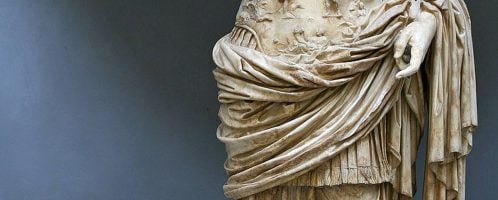
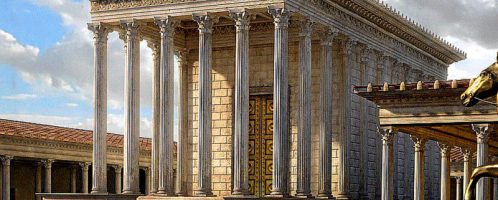
Many of us, thinking about ancient Rome and its culture, without hesitation will mention the famous Roman monuments such as Pantheon, Colosseum, triumphal arches, Hadrian’s Wall or the Appian road. However, less well-known monuments have survived to our times, which delight, but are no longer as well known to tourists. Below is a list of the 10 most interesting (in my opinion) and little-known historical objects related to the Roman state.

Revolt of Avidius Cassius during reign of Marcus Aurelius
Marcus Aurelius (121-180 CE) is considered one of the best, if not the best emperor of Rome. Called the “philosopher on the throne” he conducted prudent rule in a spirit of stoicism, respecting the senate. In 175 CE there was a rebellion of Avidius Cassius – his trusted general – which was a big shock for the Romans.

When was ancient Rome really founded?
In general history, there is understanding that Rome was founded in 753 BCE by the legendary king Romulus, who according to the Romans was the son of Mars – the god of war and the priestess of the goddess Vesta, who was to descend from the family of Aeneas himself. The real date of founding Rome was not known fully even for Romans. Furthermore, archaeologists and researchers conducted their own attempts to determine when the “Eternal City” was founded.

Structure of early Imperial Roman army
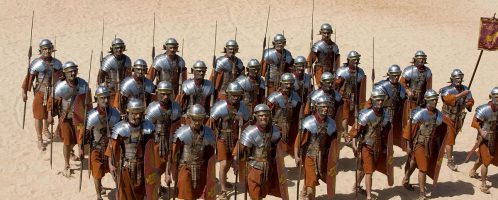
The Roman Legion (legio) was organized to ensure maximum efficiency not only at the level of the entire legion, but also at its individual units. To this end, a strict command structure and precise division into individual units was created, which was largely due to the long evolution of the Roman army throughout history.
Procedures for controlling the law in Roman Republic
In ancient Rome, institutional mechanisms emerged to determine whether the lower law was in conformity with the higher law. It turns out that some Roman procedural solutions resembled the modern doctrine of judicial review of the law.
History of Rome
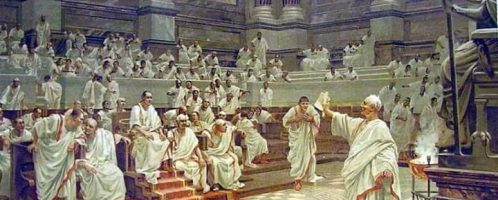
The origins of Rome are shrouded in mystery. There are many legends about the rise of Rome. One of them says that the city was founded by the hero of the Trojan war – Aeneas. After capturing and destroying Troy, he was to come to a land called Latium. He died shortly thereafter, which caused prolonged struggles to gain power among his descendants.
Antonine Plague
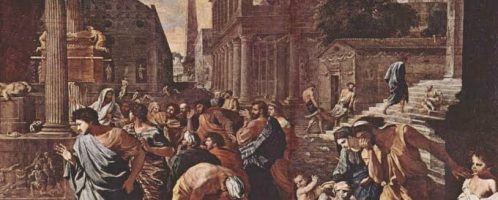
The Antonine Plague (pestis Antonini), also called the Plague of Galen, was a pandemic brought to the Roman Empire by returning Roman soldiers from the Middle East campaign. The scourge, which according to today’s research was most likely smallpox or measles, overrun the Empire in 165-180 CE.