If you have found a spelling error, please, notify us by selecting that text and pressing Ctrl+Enter.

Articles

Roman state existed for nearly thirteen centuries, repeatedly exerting a profound influence on the course of history. I present the history of ancient Rome in the individual articles below, which not always refer solely to the Eternal City itself but encompass the wider world of the Roman Empire.

I encourage you to submit your own articles and to report any corrections or factual inaccuracies.

History of Rome

The origins of Rome are shrouded in mystery. There are many legends about the rise of Rome. One of them says that the city was founded by the hero of the Trojan war – Aeneas. After capturing and destroying Troy, he was to come to a land called Latium. He died shortly thereafter, which caused prolonged struggles to gain power among his descendants.

Roman Pantheon

Antonine Plague

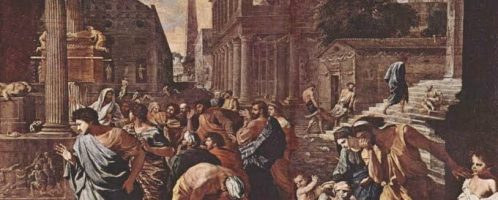
The Antonine Plague (pestis Antonini), also called the Plague of Galen, was a pandemic brought to the Roman Empire by returning Roman soldiers from the Middle East campaign. The scourge, which according to today’s research was most likely smallpox or measles, overrun the Empire in 165-180 CE.

Antonine Plague

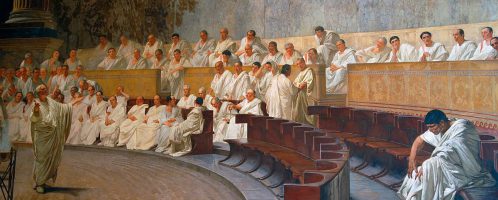
Secessio plebis

Ancient Rome from the beginning of its existence consisted of two social layers – patricians and plebeians; higher and lower state respectively. Lack of influence on state decisions and the use of plebe by patricians led to the so-called secessio plebis that took place five times in Rome’s history.

B. Barloccini, Plebeian Secession

Roman triumvirates

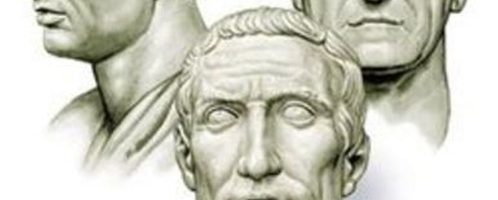
In ancient Rome, the term “triumvirate” (from trium viri – “three men”) was used to describe a college made up of three officials elected to perform certain tasks. Two such meetings have gone down in the history of Rome. Both took place during the so-called crisis of the Roman republic and decided about the division of power between influential politicians. In fact, these were agreements bypassing the senate, which was losing its prerogatives.

Three influential politicians: Pompey, Crassus and Caesar 

Crisis of Roman military in middle of 2nd century BCE

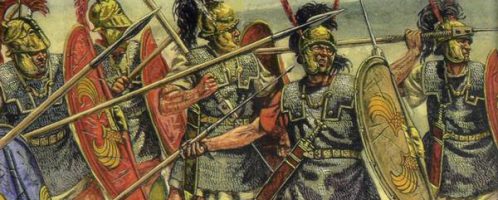
The history of ancient Rome is widely associated with the successes of the invincible legions that crushed the armies of the enemies of the Empire. In such situations, many people think of Caesar’s exploits under Alesia, Scipio under Zama or Marius under Vercellae. This very simplified image of ancient Rome does not take into account the broad context of the history of Roman military. Few people remember that the Roman state also experienced in its history moments of crisis in many areas, including military aspects.

Soldiers of the Roman Republic

Roman rams – bureaucracy without limits

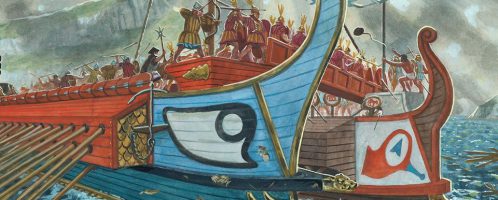
Researchers have been looking for relics of Punic Wars for years. Underwater archaeology is very helpful in this. The seabed off the coast of Sicily has been explored for years, in the Aegean Islands (currently Aegadian Islands, or simply Aegadian Islands), where March 10, 241 BCE, during the First Punic War there was a battle between Carthage’s fleet and the Roman fleet. In the course of the work, numerous rams (rostrum) were discovered and excavated, once menacingly mounted on the beaks of Roman and Carthaginian warships. Since they were cast in bronze, the rams did not corrode and remained in excellent condition.

Clash of the roman fleet | Photo: Giuseppe Rava from Osprey's book, The  Ships of Republican Rome

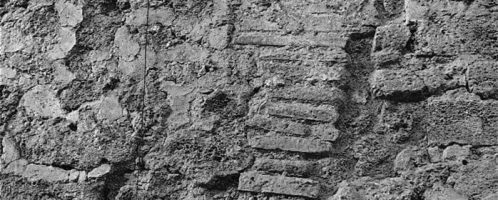
Earthquake from 63 CE

According to Seneca the Younger, on February 5, 63 CE1, a strong earthquake occurred near Vesuvius. As it turned out later, it was a signal about the increased activity of the volcano and the announcement of a much worse cataclysm, which in 79 CE. destroyed, among others Pompeii and Herculaneum.

Damage after an earthquake in CE 62

Spelling error report

The following text will be sent to our editors: