If you have found a spelling error, please, notify us by selecting that text and pressing Ctrl+Enter.

Curiosities of ancient Rome

The world of the ancient Romans was rich in extraordinary, and sometimes even surprising, facts. We draw our knowledge of Roman daily life, customs, and mentality primarily from works left by ancient writers and historians. It is thanks to them that we discover information that is astonishing today – sometimes even hard to believe. Below are some interesting facts that reveal a lesser-known and less obvious side of the Roman world.

I encourage you to submit your own suggestions and to report any corrections or inaccuracies.

Events in Asculum in 91 BCE

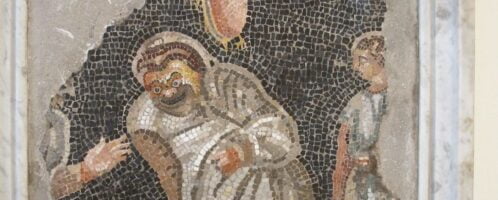
In 91 BCE in the city of Asculum (the city of the Sabines in southern Italy) theatrical performances took place, during which the Roman part of the audience killed one of the comedians who showed an anti-Roman attitude. When an actor of Latin origin was to appear next, the man decided to use a joke to get out of the situation, fearing for his life.

Roman mosaic showing the actor in a mask

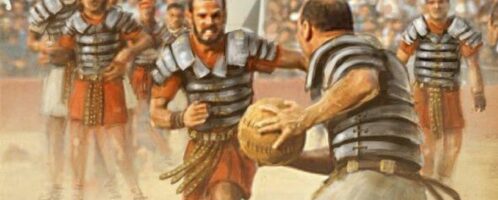
Harpastum – Roman rugby

Sports were also practised naturally in ancient Rome. The game harpastum was especially popular in the army. It is considered the ancestor of today’s rugby, although some believe that today’s football also comes from this discipline.

Harpastum

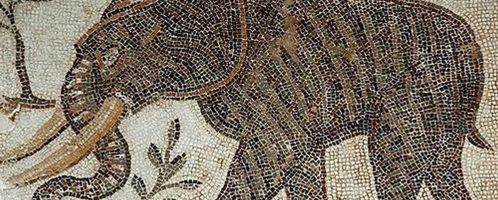
Hunting in Roman world

Ancient Romans weren’t as passionate about hunting as the Greeks. They treated it more as a sport and entertainment than an educational element. Hunting provided movement and exercise.

Elephant on Roman mosaic

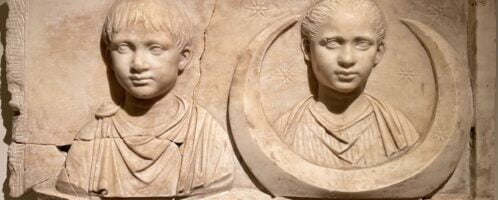
Roman bas-relief showing portraits of boy and girl

Roman bas-relief showing portraits of a boy and a girl. The crescent moon and the stars around the girl’s head suggest that she is in heaven or that she remained a virgin until her death. The object is dated to the end of the 2nd century CE and is in the collection of the Denmark National Museum in Copenhagen.

Roman bas-relief showing portraits of boy and girl

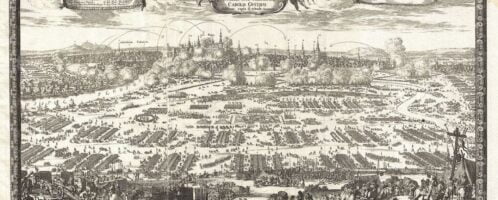
Carrodunum

Carrodunum was the name of the city mentioned in Ptolemy’s “Geography” (II, 11, 29) identified with today’s Cracow. The origin of the name is Celtic, as indicated by the particle dunum derived from the Celtic languages ​​and meaning the city.

View of Cracow in 1697

Manumission slave in Rome

Manumission of a slave was referred to in ancient Rome as manumissio (literally “releasing from hand”). Originally, this practice took place in a public place, usually in front of a judge. The owner then touched the slave’s head with his walking stick and let him go. In practice, however, such occasions were held in the group of family and friends, and the slave would eat dinner with the family for which he was serving.

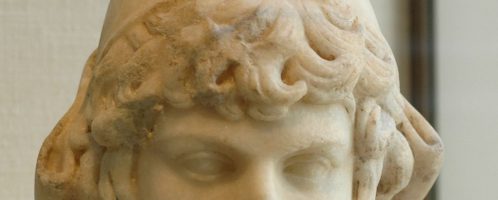
Phrygian god of vegetation Attis in a Phrygian cap

Stone of Carausius

Stone of Carausius is a preserved stone from the end of the 3rd century CE, on which the name of the usurper Carausius was engraved. Interestingly, at the other end of the stone is the name of Emperor Constantine. After the fall of Carausius, his name was removed from public places (damnatio memoriae), and the stone was simply turned over and his inscription was hidden.

Stone of Carausius

Spelling error report

The following text will be sent to our editors: