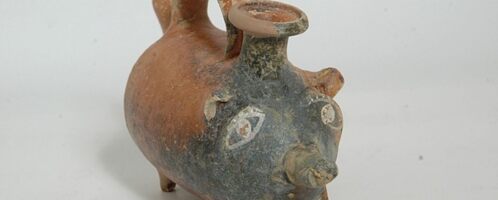
Roman terracotta toy
Roman terracotta toy and a baby bottle in one, in the shape of a pig.
If you have found a spelling error, please, notify us by selecting that text and pressing Ctrl+Enter.
The world of the ancient Romans was rich in extraordinary, and sometimes even surprising, facts. We draw our knowledge of Roman daily life, customs, and mentality primarily from works left by ancient writers and historians. It is thanks to them that we discover information that is astonishing today – sometimes even hard to believe. Below are some interesting facts that reveal a lesser-known and less obvious side of the Roman world.
I encourage you to submit your own suggestions and to report any corrections or inaccuracies.
Roman terracotta toy and a baby bottle in one, in the shape of a pig.
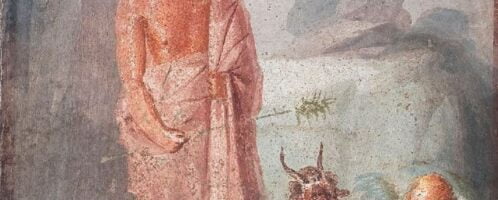
Trenching was an important method of siege warfare in antiquity. According to legend, during the siege of the Etruscan capital Veii in 396 BCE, Roman soldiers digging the tunnel heard a bard over them proclaiming that the victory would be given to the side that offered the gods first to sacrifice the sacred parts of the sacrificial animal.

Partially preserved marble sculpture of a certain Diadumenos, who adorns his head with a headband after winning an athletics competition. The object is dated to the 1st century CE; is on display at The Metropolitan Museum of Art in New York.

The ancients were keenly interested in the past. The stories of the mythical Trojan War and the return of the heroes from Troy to their homes throughout the epoch were a source of entertainment for both aristocrats and ordinary bread eaters, and inspiration for sculptors and poets.

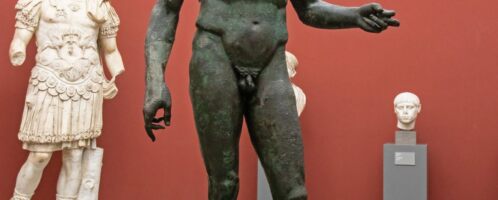
Roman bronze statue probably depicting Hercules as a young man. The eyes of the sculpture are made of blue glass. According to researchers, once a figure could hold a bow and an arrow. The object was most likely discovered in Tivoli, in central Italy. The sculpture is dated to the 1st BCE – 1st century CE. Currently, the artifact is in Ny Carlsberg Glyptotek, Denmark.
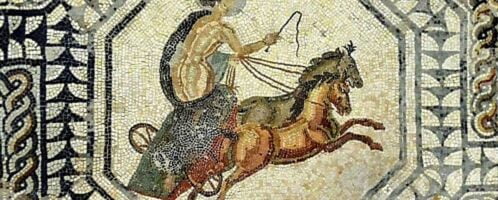
Fragment of a Roman mosaic showing the goddess Luna on a chariot. The object is dated to the 3rd century CE and was discovered in Orbe-Boscéaz, Switzerland.
Fragment of a Roman relief from Hadrian’s Mausoleum depicting Emperor Marcus Aurelius. It is located in Glyptotek Ny Carlsberg in Copenhagen.

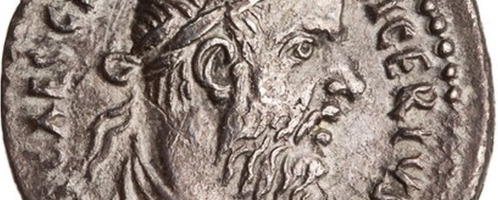
Gaius Pescennius Niger appeared in the pages of history in extremely interesting and difficult times for Imperium Romanum. After the murder of Emperor Commodus and the short and at the same time tragic reign of Pertinax, the entire state plunged into a civil war that lasted until 197 CE.
Roman wall fresco depicting Amor fighting with Pan in front of Silenus – the deity of nature. The clash of these mythical idols was in ancient times a symbol of the struggle between love and desire. The object was found in Pompeii, in the house of Meleager. It is now housed in the National Archaeological Museum of Naples.