If you have found a spelling error, please, notify us by selecting that text and pressing Ctrl+Enter.

Curiosities of ancient Rome

The world of the ancient Romans was rich in extraordinary, and sometimes even surprising, facts. We draw our knowledge of Roman daily life, customs, and mentality primarily from works left by ancient writers and historians. It is thanks to them that we discover information that is astonishing today – sometimes even hard to believe. Below are some interesting facts that reveal a lesser-known and less obvious side of the Roman world.

I encourage you to submit your own suggestions and to report any corrections or inaccuracies.

Roman herma showing young woman named Statia Quinta

Roman herma showing a young woman named Statia Quinta. The inscription on the statue gives her name along with the letters L.L., which researchers translate as Lucia Liberta, meaning “freedwoman of Lucius”. The object was found on the northern shore of Lake Nemi (central Italy) in Diana’s sanctuary in 1887.
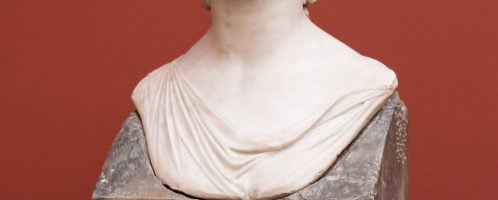
Roman herma showing young woman named Statia Quinta

Impressive fortifications of Dacians

Dacians were a people living in what is now Romania and part of Hungary. To this day, we can admire the remains of buildings and fortresses they built in the Orăștie mountains, which are part of the Carpathians. They prove how well-developed the Dacians were.

Remains of buildings in Sarmizegetusa Regia

How did ancient Romans lose weight?

Many people ask themselves how to lose weight in an easy and fun way. The answer to this question is not easy. As it turns out, people in ancient times had similar problems. Let us ask ourselves: how did the ancient Romans lose weight?

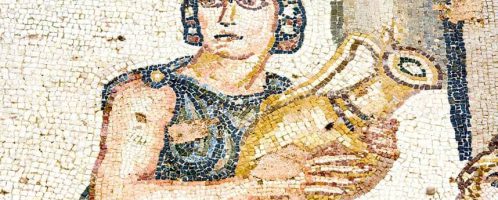
Roman mosaic showing women playing a ball

Disruptions in Roman market

The turmoil in the financial markets and in the real economy made state intervention necessary. Carrying out active measures to limit the effects of the crisis, however, is nothing new and was used hundreds of years ago, as evidenced by the history of one of the first banking crises in history, which took place in the Roman Empire.

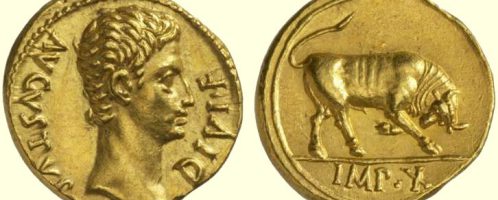
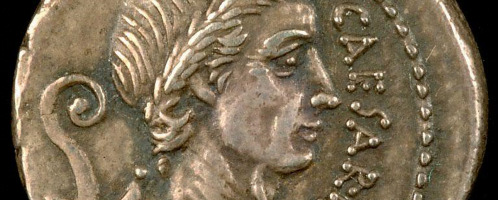
Coin of Augustus

Mons Palatinus in legends of Livy

A hill on which, according to tradition Romulus founded in 753 BCE Rome was a Palatine (Mons Palatinus). Livius derives its name from the Arcadian city of Pallanteum, from which Euander came – the first ruler of this area, who also established the Greek cult of Heracles in Italy. Why exactly the Palatine?

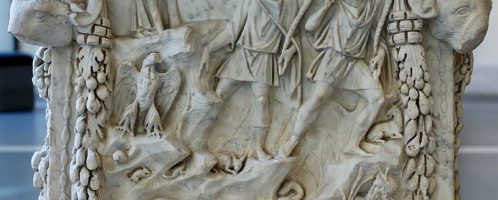
Remus and Romulus fed by the She-wolf in the Lupercal grotto on the Palatine

Music in life of ancient Romans

Music in ancient Rome was often associated with work. The singing was supposed to give it a rhythm and a good pace. For example, rowers worked listening to the so-called hortator, that is, they rowed to the rhythm of the music.

Music in life of ancient Romans

Stay of Caracalla in East

In the years 215-216, Emperor Caracalla travelled through the Balkans, Turkey, and Syria to Egypt and Alexandria. The very expedition of Caracalla to the east was primarily of propaganda and sentimental nature, due to the adoration of the figure of Alexander the Great. It is also possible that the ruler’s entourage was making preparations for the planned Party expedition in the coming years.

Caracalla

Spelling error report

The following text will be sent to our editors: