If you have found a spelling error, please, notify us by selecting that text and pressing Ctrl+Enter.

Curiosities of ancient Rome

The world of the ancient Romans was rich in extraordinary, and sometimes even surprising, facts. We draw our knowledge of Roman daily life, customs, and mentality primarily from works left by ancient writers and historians. It is thanks to them that we discover information that is astonishing today – sometimes even hard to believe. Below are some interesting facts that reveal a lesser-known and less obvious side of the Roman world.

I encourage you to submit your own suggestions and to report any corrections or inaccuracies.

Evolution of patronage in late Roman Empire

In Roman society, the existence of a patron-client relationship was common. Most often, a poor citizen or a liberator submitted to a higher-ranking Roman who, through his position and property, could act in favour of the client. In return, the client was the patron’s support and support, e.g. during elections. Moreover, having many clients aroused respect and strengthened the position of the patron in society. In the 4th century CE however, patronage (patrocinium) changed and the patron-client relationship began to hit the state directly.
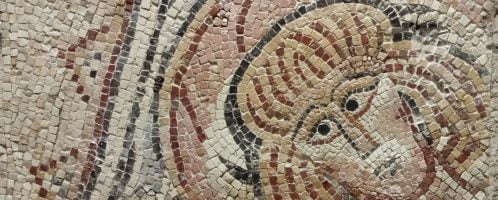

Roman mosaic floor

Sacred border of Rome

Pomerium or pomoerium (literally “beyond the mountains”) was a line of a sacred character delimiting the boundaries of the city of Rome. In legal terms, Rome functioned as an institution only within these borders, beyond which there were simply lands (ager) belonging to Rome.

Pomerium

Map showing total of 11,655 Roman settlements

Map showing a total of 11,655 settlements that were founded or managed by the ancient Romans. The map was made by Harvard University as part of the DARMC PROJECT project. The settlements are grouped into three categories: a certain city location (square); probable location (circle); or possible location (semicircle).

Map showing total of 11,655 Roman settlements

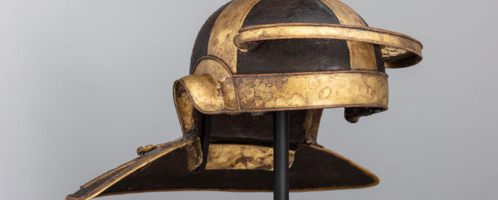
Beautifully preserved Roman helmet from 3rd century CE

A beautifully preserved Roman helmet from the 3rd century CE. The helmet of Weisenau belonged to the soldier Julius Mansuetus, who engraved his name on the nape of his neck. In addition to the name, there are pictures of mice and loaves of bread on the helmet. The helmet also had cheek pads, which, however, have not survived to our times.

Beautifully preserved Roman helmet from 3rd century CE

Beautiful Roman vessel preserved

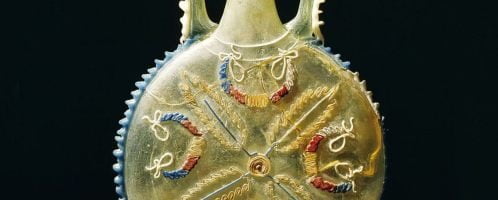
A beautiful Roman vessel made of colourless glass has been preserved. The object is 27.5 cm high and dates back to the 3rd century CE. The artifact was found in Cologne, Germany.

Beautiful Roman vessel preserved

Vomiting during feast was not routine

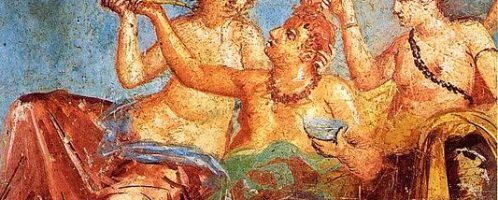
The custom of vomiting (by skilfully manipulating a feather or a slave’s finger) during Roman feasts, although mentioned in various sources, almost always applies to only a few Roman emperors (Vitellius, Claudius, Nero; the latter helped himself with enemas); the other thing is that we know less about the figures of the lower class – few of them have their own biographies.

Roman feast in the fresco

Spelling error report

The following text will be sent to our editors: