

If you have found a spelling error, please, notify us by selecting that text and pressing Ctrl+Enter.
Curiosities of ancient Rome
The world of the ancient Romans was rich in extraordinary, and sometimes even surprising, facts. We draw our knowledge of Roman daily life, customs, and mentality primarily from works left by ancient writers and historians. It is thanks to them that we discover information that is astonishing today – sometimes even hard to believe. Below are some interesting facts that reveal a lesser-known and less obvious side of the Roman world.
I encourage you to submit your own suggestions and to report any corrections or inaccuracies.
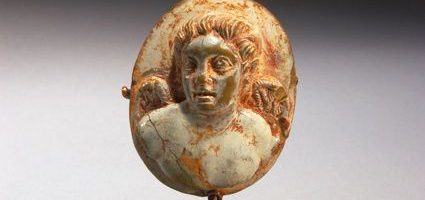
Roman cameo depicting Amor
Roman carved cameo (decorative stone), turquoise in color, with the bust of the winged Amor. Object dated to the 2nd-3rd century CE.
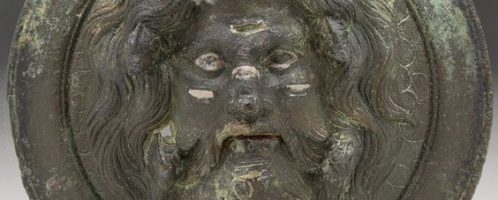
Medallion showing bearded Oceanus
Roman medallion, made of bronze, showing the bearded face of Oceanus (Oceanus). Object dated to the 1st-2nd century CE.
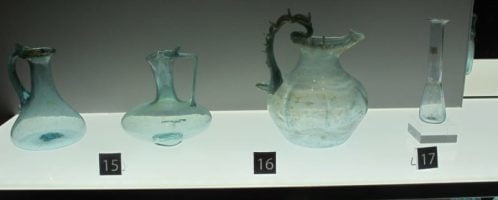
Roman glass
The glass was not an invention of the Romans. In many ancient lands, efforts were made to find light-transmitting material that could be used to cover window openings, previously covered with wooden blinds. Various materials were experimented in the Hellenic world: grease-soaked cloth, thin plaster tiles, mica and a horn. For hundreds of years wealthy people have advised you in this way. However, as glass was learned over time, it began to displace other materials.
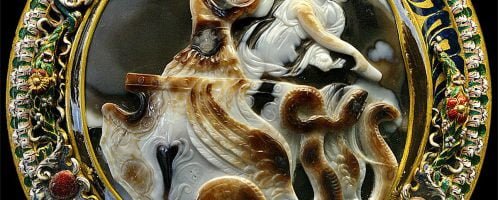
Cameo showing Claudius and his wife in chariot
Roman cameo, made of sardonyx, depicting Emperor Claudius and his wife (probably Messalina) on a chariot drawn by snakes. It is located in the National Library of France in Paris.
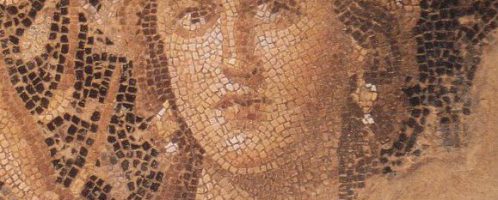
Woman – sophist?
Sophists were concerned with making speeches that moved crowds, although they often concerned fictional situations or events from the past. It wasn’t necessarily what the rhetorian said, but how he says it. Speaking skills were highly valued in both the Greek and Roman worlds.
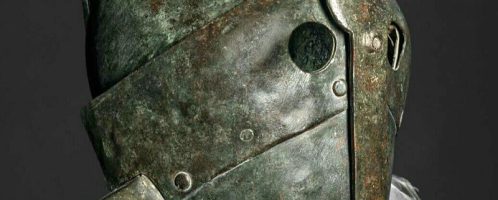
Marcus Porcius Cato Licinianus – son-soldier of Cato the Elder
Marcus Porcius Cato Licinianus was one of the sons of the famous Cato the Elder known as the Censor, who became famous for his ruthless attitude towards Carthage and an extremely strict approach to life. Licinianus was born in 192 BCE and he an example of a young Roman who came from the upper classes of society. As his father was a distinguished soldier for the Republic, a Roman tradition called for his son to follow in his footsteps.

Tax exemption decree and Cleopatra VII’s signature?
Is there any document or work whose author was Cleopatra VII preserved to our times? According to later Arab sources, the last queen of Egypt, apart from her beauty, was also distinguished by intelligence and broad knowledge. She was reportedly the author of works on medicine, pharmacy, toxicology and cosmetology. Naturally, however, none of the works has survived to our times. However, we have another very interesting archaeological material.

Fragment of Roman wall painting from amphitheater
Fragment of a Roman wall painting with a Latin inscription from the 3rd century CE. The object was found on the remains of an amphitheater in ancient Viminacium in eastern Serbia.
