If you have found a spelling error, please, notify us by selecting that text and pressing Ctrl+Enter.
Curiosities of ancient Rome
The world of the ancient Romans was rich in extraordinary, and sometimes even surprising, facts. We draw our knowledge of Roman daily life, customs, and mentality primarily from works left by ancient writers and historians. It is thanks to them that we discover information that is astonishing today – sometimes even hard to believe. Below are some interesting facts that reveal a lesser-known and less obvious side of the Roman world.
I encourage you to submit your own suggestions and to report any corrections or inaccuracies.
Lucius Papirius Cursor, his nickname and training
Lucius Papirius Cursor (c. 365 – after 310 BCE) was one of the most valued and respected Romans in history. He held the office of consul five times and was a dictator twice. It was thanks to him that the Romans won the so-called Second Samnite War (326-304 BCE) and took revenge for the shameful defeat of the Caudine Forks in 321 BCE. Lucius Papirius Cursor received his nickname Cursor (“Runner”) because of his outstanding speed and efficiency in running.

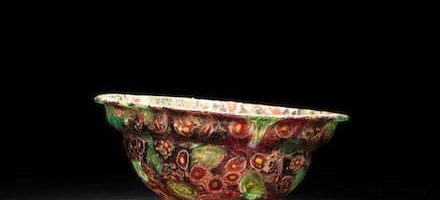
Beautifully decorated Roman wine cup with cameo
Beautifully decorated Roman wine cup with cameo. The walls of the glass vessel show either two different chariot drivers, or the same charioteer in two different shots during the race. Object dated to the 1st century CE.

Roman colored cup
Roman colored drinking cup. Object dated at the end of 1st BCE and the beginning of the 1st century CE.
Porta Principalis Dextra in Eboracum
Roman gate porta Principalis Dextra in Eboracum (present York, England), located to the right of the headquarters (praetorium). In Roman times, there was a Roman camp in the present-day area of the city. Nowadays there is also a pub called “Lamb and lion inn”.

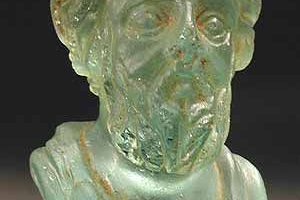
Roman glass bust of Emperor Septimius Severus
Roman small glass bust Emperor Septimius Severus. The object was found in Jerusalem and dates back to the beginning of the 3rd century CE.
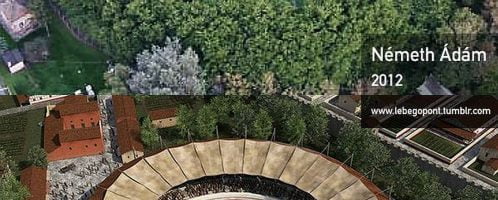
Reconstruction of Roman amphitheater in Aquincum
Reconstruction of the Roman amphitheater in Aquincum (present Budapest, Hungary). It is one of two such objects in the current Hungarian capital. The presented amphitheater was smaller (it could hold up to 7,000 spectators) and was built in the 3rd century CE.
Roman altar dedicated to Eumoplus
Roman altar dedicated to Eumoplus, slave of Nero. According to the inscription, Eumoplus was responsible for the equipment of Domus Aurea (the so-called suppellectile domus aureae).

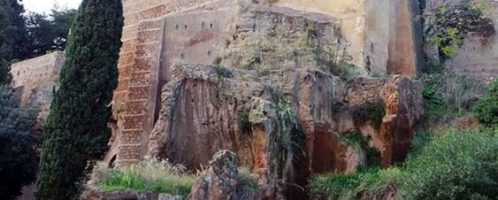
Tarpeian Rock – place of execution
Tarpeian Rock (Saxum Tarpeium) is a rocky cliff on the southern slope of the Capitol, facing the Roman Forum. In the republican times, this place was used for executions – throwing convicts from Rock.