If you have found a spelling error, please, notify us by selecting that text and pressing Ctrl+Enter.

Curiosities of ancient Rome

The world of the ancient Romans was rich in extraordinary, and sometimes even surprising, facts. We draw our knowledge of Roman daily life, customs, and mentality primarily from works left by ancient writers and historians. It is thanks to them that we discover information that is astonishing today – sometimes even hard to believe. Below are some interesting facts that reveal a lesser-known and less obvious side of the Roman world.

I encourage you to submit your own suggestions and to report any corrections or inaccuracies.

Fragment of Roman amphora in which wine was stored

A piece of a Roman amphora that was found in Colchester (England). There is a painted inscription “FAL LOLL” on the pottery, which suggests that the amphora was used to store Falernia wine, one of the most exclusive wines produced in Italy. The inscription also suggests that a man named Lollius was responsible for the wine trade, who transported the wine to Roman Britain.

Fragment of Roman amphora in which wine was stored

Roman portrait of man on mummy

Roman portrait of a man on a mummy from Egypt. Object dated to the 1st century CE and is currently in the Ipswich Museum (England). The painting belongs to the so-called groups of Fayum portraits.

Roman portrait of man on mummy

Gallus’ war campaign in Arabia

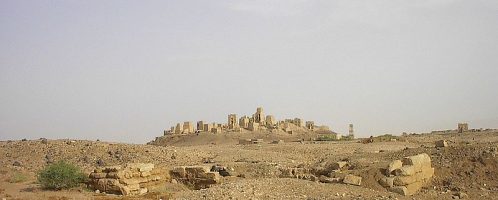
With the addition of Egypt to the Roman Empire in 30 BCE, Augustus saw a number of problems related to the new province. Regular invasions by the Kushites began from the south, and Arab pirates lurked from the side of the Red Sea. In addition, due to the commercial dominance of the Himyarites and Sabaians in the Bab el Manbed strait, the Romans had a difficult opportunity to cruise on this important route to India.

Marib

Fight between rooster and turtle on Roman mosaic

Roman mosaic showing the rivalry between a rooster and a turtle. The object comes from Aquileia in northern Italy. In the early Christian tradition, the fight of animals symbolized the clash between good and evil – the rooster portends daylight, and the turtle was considered a night animal.

Fight between rooster and turtle on Roman mosaic

Roman pocket knife

The ancient Romans had multi-purpose tools similar to today’s pocket knives of the Swiss army. Such a tool had: a knife, a spoon, a three-tooth fork, a pick and a spatula. Such a pocket knife was part of the Roman soldier’s equipment.

Roman pocket knife

Roman figurine depicting secutor

Roman figurine depicting a secutor gladiator who was well-armed and usually fought against a retiarius. The object is made of bronze and dates back to the 4th century CE.

Roman figurine depicting secutor

Spelling error report

The following text will be sent to our editors: