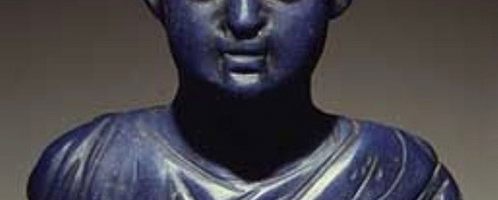
Bust of emperor Saloninus
Blue glass bust of Emperor Saloninus. It is located in the Romano-Germanic Museum in Cologne, Germany.
If you have found a spelling error, please, notify us by selecting that text and pressing Ctrl+Enter.
The world of the ancient Romans was rich in extraordinary, and sometimes even surprising, facts. We draw our knowledge of Roman daily life, customs, and mentality primarily from works left by ancient writers and historians. It is thanks to them that we discover information that is astonishing today – sometimes even hard to believe. Below are some interesting facts that reveal a lesser-known and less obvious side of the Roman world.
I encourage you to submit your own suggestions and to report any corrections or inaccuracies.
Blue glass bust of Emperor Saloninus. It is located in the Romano-Germanic Museum in Cologne, Germany.
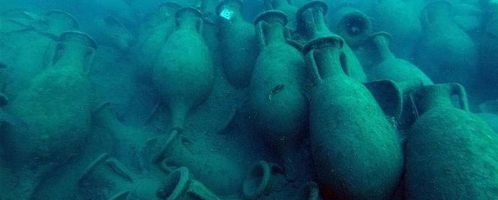
Near Villajoyosa (eastern coast of Spain), at the bottom of the sea, there is a Roman shipwreck (called Bou Ferrer) from the 1st century CE. The vessel is located at a depth of about 25 meters and about 1000 meters from the shore. Since 2013, the wreck has been made available to tourists for sightseeing.
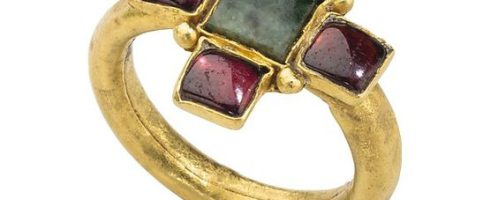
Roman ring from the 4th-5th century CE. The object is made of gold, garnet and emerald. Dimensions: 3 x 17 x 18 mm.
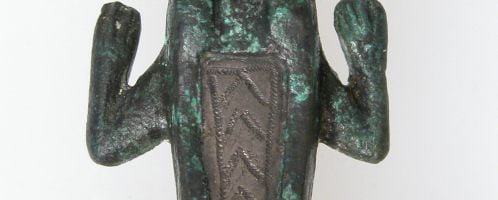
Roman brooch in the shape of a frog. Frogs are believed to have apotropaic value, that is, they protected against evil forces. The object is dated to the 2nd-4th century CE.
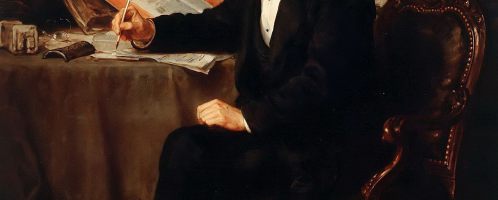
In common consciousness, the names Mommsen and Syme do not occupy a permanent place. However, they are certainly worth remembering, and in the case of an enthusiast of ancient Roman history, they must even be well known. What do these two characters have in common?
Viriconium Cornoviorum (now Wroxeter in the West of England) was founded as a Roman fort (castrum) in the middle of the 1st century CE, which was the base for the 14th Gemina legion, invading Wales. The city developed at the end of the 1st century and became the fourth largest city in Roman Britain.