If you have found a spelling error, please, notify us by selecting that text and pressing Ctrl+Enter.
Curiosities of ancient Rome
The world of the ancient Romans was rich in extraordinary, and sometimes even surprising, facts. We draw our knowledge of Roman daily life, customs, and mentality primarily from works left by ancient writers and historians. It is thanks to them that we discover information that is astonishing today – sometimes even hard to believe. Below are some interesting facts that reveal a lesser-known and less obvious side of the Roman world.
I encourage you to submit your own suggestions and to report any corrections or inaccuracies.
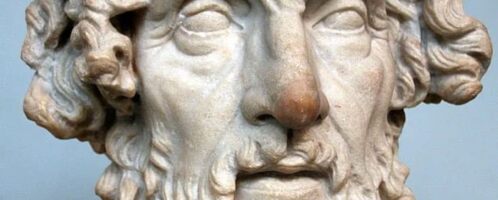
Certain Calvisius Sabinus
Seneca the Younger, a Roman philosopher and writer from the 1st century CE, mentions in his letters Calvisius Sabinus – a wealthy and respected Roman who had such a bad memory that he couldn’t even remember the names of Homeric heroes.
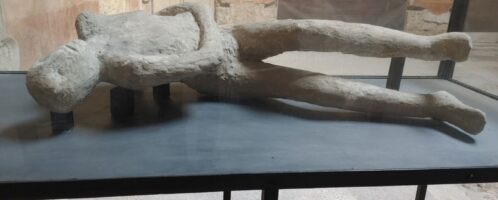
Plaster cast of body
Plaster cast of the body of a person who died as a result of the eruption of Vesuvius in 79 CE. The object is located in a glass box in the atrium of the so-called The Villa of the Mysteries in Pompeii.
Selenite – valued material
In ancient Rome, selenite (referred to as lapis specularis, meaning “mirror stone”) was a valued mineral. Pliny the Elder emphasized the advantages of this mineral, which could be cut into thin layers through which light with a characteristic soft glow, similar to moonlight, passed.

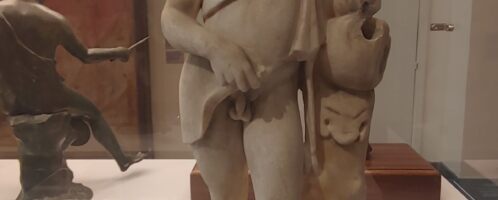
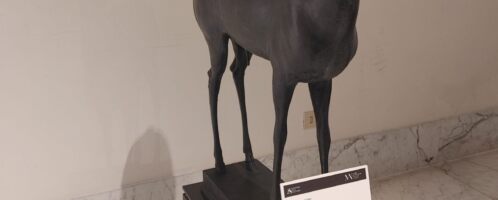
Roman statue showing young deer
Roman statue showing a young deer. The object is made of bronze and was discovered in the Villa of the Papyrus in Herculaneum. The artifact is in the National Archaeological Museum in Naples.
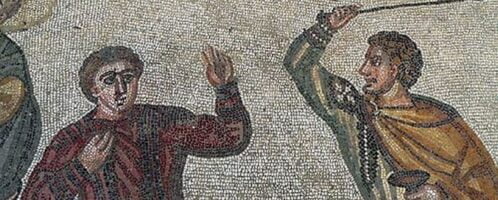
Punishment for himself
Emperor Julian the Apostate (reigned 361-363 CE) went down in history as a sensible and righteous Roman ruler. He became famous, among others, for his actions to eliminate bureaucracy and improve the rule of law.

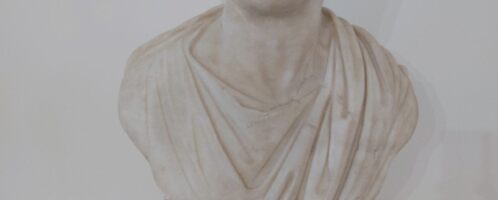
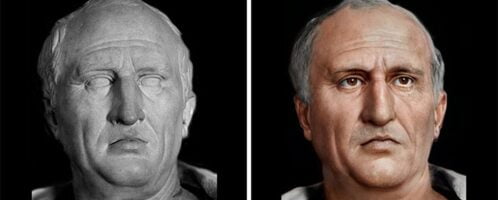
Reconstruction of Cicero’s image
Computer reconstruction of the image of Cicero (106-43 BCE) based on a Roman sculpture. Visualized by Alessandro Tomasi, who uses Photoshop and Artbreeder for his work. As the artist pointed out, his work is based on numerous ancient sources, and his portfolio includes numerous visualizations of figures from antiquity.