
Ludus latrunculorum – Roman game of rogues
Ludus latrunculorum (also called latrunculi or latrones or milites) was a Roman board game that was extremely popular. Most likely, two players took part in the game.
If you have found a spelling error, please, notify us by selecting that text and pressing Ctrl+Enter.
Unknown Facts are curiosities revealing little-known, surprising, or rarely discussed information from the world of ancient Rome and antiquity. This category includes unusual details, curiosities, and facts that offer a less obvious perspective on the Roman Empire.
Ludus latrunculorum (also called latrunculi or latrones or milites) was a Roman board game that was extremely popular. Most likely, two players took part in the game.

Marcomannic Wars were fights in the years 166-180 CE between the Roman Empire and hostile barbarous tribes: the Quadi, the Iazyges and Marcomanni. According to the “Historia Augusta” account, Marcus Aurelius was ultimately seeking to create two new Roman provinces: Sarmatia and Marcomania, as evidenced by the medallion found in Cyprus dedicated to Marcus Aurelius and his son Commodus, with the inscription PROPAGATORIBVS IMPERII, meaning “those who expanded the borders of the Empire”.

It is probably known to everyone a phenomenon in the form of Gaius Verres and his abuses as governor of Sicily. He was so bold and greedy in his actions that we can expect that there was no sanctity for him or any border that he could not cross in his abuses against the state and private persons, as evidenced by the refusal to give Corinthian vases to Mark Antony in 43 BCE, for which he paid with his life.
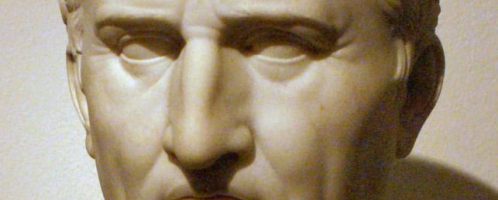
Lanista was the trainer of gladiators. The lanista’s art was probably to train people to fight, and then put them against each other in interesting combinations: for example, the combination of “fishhead” (mirmillo) with “net-man” (retiarius).

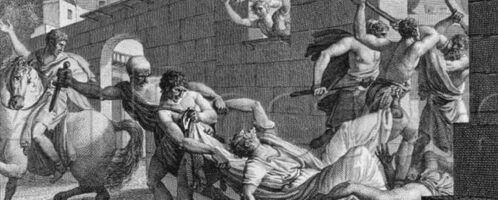
Political violence has existed in Rome for a long time. Often there were fights or scuffles between supporters of various candidates. However, 57 BCE took the violence to a new level.
Roman cities that arose along with the development of the empire were characterized by a specific location resulting from economic premises. As a result of these location rules, it is believed that Roman cities were primarily consumer centres where goods were traded. However, in many cases the location of Roman cities did not coincide with already existing and favourably located settlements. This was due to some characteristics of the urban layout of the Roman city. This arrangement can be seen in preserved cities like Pompeii or Herculaneum.

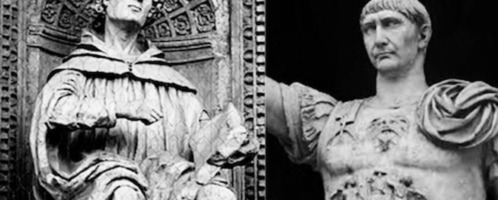
Pliny the Younger was a Roman politician and magistrate during the Roman Empire. The most important position he took was the office of governor (legatus Augusti) of the province of Bithynia et Pontus (current Turkey), in 110 CE, during the reign of Emperor Trajan.
With the expansion of the Roman republic in the second and first century BCE intensified slavery. Some sources say that in the first century BCE in Italy alone there were 2-3 million slaves, which constituted 35-40% of the population on the Apennine peninsula.

As it turns out, the Roman way of counting and determining specific days in a month was different from what we use now. Ancient Romans used the following terms: calends, nones, ides.

Famous Carthaginian Great Harbour was an artificial protected water reservoir. In ancient times this type of port was called the Greek cothon (“drinking vessel”). These types of constructions were built especially in lands controlled by Phoenicians, e.g. Sicily or Cyprus.
