

If you have found a spelling error, please, notify us by selecting that text and pressing Ctrl+Enter.
Curiosities of ancient Rome (Unknown facts)
Unknown Facts are curiosities revealing little-known, surprising, or rarely discussed information from the world of ancient Rome and antiquity. This category includes unusual details, curiosities, and facts that offer a less obvious perspective on the Roman Empire.
After death of Caesar
After the death of Julius Caesar in 44 BCE, Mark Antony came up with the idea of honoring deceased ruler and name the seventh month with his name. This is how Latin Julius, French Juillet and English July were created, which is simply July (in our name comes from summer blooming July).

Beard in Roman world
A qualified hairdresser (tonsor) in Rome could make a career and earn good money. It should be noted, however, that shaving was not very pleasant and easy at the time. The Romans used much worse steel than we do today, and it has often happened that the razor (novacula) quickly blunted. In addition to shaving, cutting and waxing, hairdressers also offered the removal of individual facial hair with tweezers (volsella).

Lead – Romans killer
Roman women lubricated their faces with lead paste, which whitened their skin (pallor was extremely fashionable). Lead has often been used as a sweetener and food preservative. It is believed that using a large amount of defrutum (sweet wine) badly affected the health of the Romans. However, it should be mentioned that in ancient times no one knew about the harmful meaning of this element.

Play with ball
Most people talk about Roman fun and entertainment, paying particular attention to gladiator fights, libraries, theatre, etc. The above-mentioned entertainments were undoubtedly of great value to the ancient Romans, but they took place only once in a while. So how did they fill this waiting time?

Consequences of Spartacus’ uprising
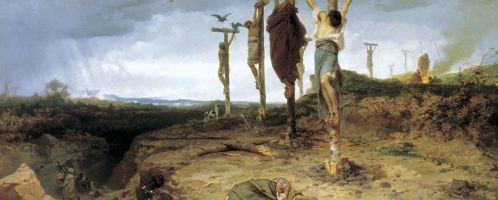
The slave revolt under Spartacus, in the years 73-71 BCE, was finally suppressed by Marcus Crassus and partly by Pompey Magnus. It was the largest slave uprising in ancient Rome. Most of the insurgents were killed in direct fighting. However, six thousand prisoners captured by Crassus’ legions were crucified on the Appian road from Rome to Capua, where the rebellion began.
Romans and druids
When, in the first century CE, during the reign of emperor Claudius, the Romans invaded the British Isles. The hordes of Celtic warriors, despite fierce and courageous resistance, finally had to succumb to criminal and well-trained legionaries, and “Pax Romana” quickly became an accomplished fact on the islands. However, not everyone liked the Roman occupation. The most numerous group in the anti-Roman opposition were druids, whom the Romans ruthlessly persecuted. But who were the druids?

Largest Roman circus – Circus Maximus
The first real Roman circus was Circus Maximus built for chariot racing. In 329 BCE, the finish, stables and coach houses were fixed for the first time. In the middle, statues of deities were placed, e.g. Pollentia (Overpowered Strength), and a system for marking stages in the form of large wooden eggs – septem ova, which moved on a pole – spina – marked the stage of the run.


Remains of founding’s legend
The ancient Romans cared for tradition and myths on which attachment to their homeland was based. Naturally, the most important founding legend of Rome was the story of the twins Romulus and Remus.
