Cesspits – source of knowledge about Romans
The intimate life of ancient Romans is well known, among others due to discovered cloisters. Evidence of this is found in the Herculaneum place under a small complex of commercial premises and apartments.
If you have found a spelling error, please, notify us by selecting that text and pressing Ctrl+Enter.
The world of ancient Romans abounded in a number of amazing curiosities and information. The source of knowledge about the life of the Romans are mainly works left to us by ancient writers or discoveries. The Romans left behind a lot of strange information and facts that are sometimes hard to believe.
The intimate life of ancient Romans is well known, among others due to discovered cloisters. Evidence of this is found in the Herculaneum place under a small complex of commercial premises and apartments.

Ancient Greeks and Romans greatly valued the noble laurel (Laurus nobilis), they considered it a noble and powerful plant. The winner of the Olympic or Pythian Games received a laurel wreath of bay leaves (a tree dedicated to Apollo) from the Tempe Valley in Thessaly, with which he then proudly walked around the city. The leaves of this plant were worn by prominent citizens, priests, poets and heroes. Worn on his head, he commanded the person’s genius.

In 2010, researchers discovered 14 military graves in North Yorkshire (Britain), in which next to the bodies of the buried Romans were the remains of sandals, including preserved fibers among rust from nails from sandals. This proves that the ancient Romans could wear socks along with sandals , and thus extravagant fashion appeared much earlier than we think.

To this day, the ancient Romans appear to us as wasteful and absorbed in abundant feasts. As it turns out, the upper social classes did not spare a penny and allowed themselves crazy feasts.

The fall of the Republic and the beginnings of the Roman Empire is a fascinating period in world history. Julius Caesar, Marek Antony and Octavian Augustus undoubtedly had a great impact on the fate of Rome at that time. It can be said that their actions have changed the world.
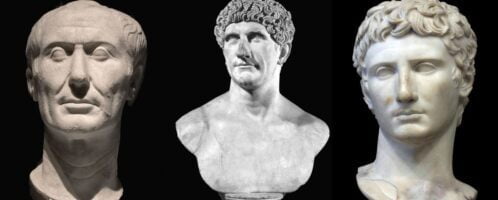
Octavian Augustus imposed on senators and higher rank of eques (equites inlustres) banned entry to the province of Egypt without explicit consent and established the prefect Egypt an eques, not a senator (as was adopted in other provinces).

Romans invented heated floors and central heating. They called the system hypocaustum, and it was used for heating homes and public and private baths with hot air. The word literally means “inferno,” from the Greek word hypo – below or below, and kaiein – burn or light a fire. In the central room under the floor, there was an oven that heated the air.

The famous “Gardens of Maecenas” ( Horti1 Maecenatis), as the name suggests, arose on the initiative of Gaius Cilnius Maecenas, patron of art and culture in ancient Rome at the end of the 1st century BCE. They were one of the first such beautiful gardens in Rome; their creation was modelled on their Hellenistic and Persian counterparts.
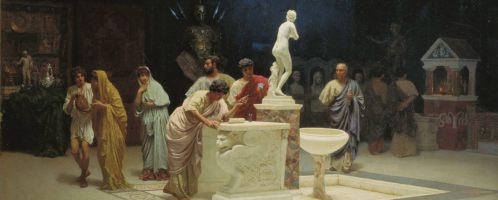
Rose in ancient times had a very important symbolic meaning. This flower was associated with numerous religious rituals, imposing the obligation of secrecy on all persons participating in the ceremony.