If you have found a spelling error, please, notify us by selecting that text and pressing Ctrl+Enter.

Articles

Roman state existed for nearly thirteen centuries, repeatedly exerting a profound influence on the course of history. I present the history of ancient Rome in the individual articles below, which not always refer solely to the Eternal City itself but encompass the wider world of the Roman Empire.

I encourage you to submit your own articles and to report any corrections or factual inaccuracies.

Torre Annunziata and Villa of Empress

The small village of Torre Annunziata is located near Pompeii. Most tourists who visit the ruins of ancient cities pass this place completely unaware of the treasure hidden there. Meanwhile, it is worth going off the beaten track to enjoy a real jewel of antiquity in peace and quiet, and without the crowds omnipresent in the season, which has survived to this day in a time capsule, which turned out to be volcanic ashes.


Villa in Oplontis

Holidays and tourism in ancient Rome

Ancient Romans, just like us, were doing a lot of recreation every spring and summer. The richest started peregrinatio in spring, that is trips to their homes outside the city. Cicero e.g. he had six villas where he could go to relax, if he had time, felt like it or felt tired of the big city living in Rome.

Appia Antica Regional Park

Roman sense of humor

Roman jokes have been preserved mainly due to ancient writers. Many of them were born of real stories, which were mentioned by lawyers like Cicero, which is worth adding, over two thousand years ago he was considered a prankster and “playful”.

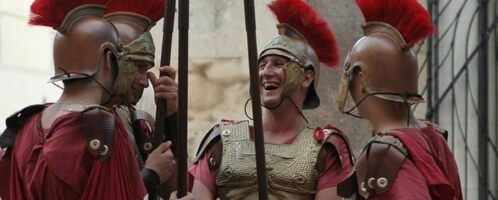
Laughing Roman legionaries in Rome

Capturing wild animals in ancient Rome

Ancient Romans caught wild animals mainly for the needs of organized games and hunting in amphitheatres (the so-called venationes). Exotic animals were imported from many lands and provinces, and most often caught by natives who were familiar with their trade and the surrounding area.

Hunting elephants in the arena

Pecunia olet? – first Roman money

Pecunia non olet – money does not stink – according to legend, this word was committed by the emperor Vespasian by cutting off the complaints of his son, Titus, to donate income to the imperial treasury from taxing public toilets.

Roman mosaic showing oxen

Known and unknown Marcomannic Wars: ‘Miracle of rain and lightning miracle’ from 173 CE

The Marcomannic Wars is a series of wars that the Roman Empire waged in the years 167-180 CE with barbarian tribes living in the areas neighbouring its northern borders. During the entire period of the conflict, many ethnically different barbarian tribes took part, such as the German Longobards, Marcomannians, Narists, Quads or Boers, but also the Celtic Kotyns, the Danish Kostobok and finally the Sarmatian Iazyges and Roxolani.

Miracle of rain on Marcus Aurelius column

Transfer of property ownership in ancient Rome

Every Roman owner was entitled to transfer his title to the property, however for the actual transfer to occur there were separate legal procedures required between the transferor and the buyer. Apart from the agreement between the parties involved there was also needed a visible and obvious act of transferring the control over any given thing. These requirements were abolished in 293 CE with an emperor’s act in accordance with simplifying the property trading.

A print showing Roman citizens at the Twelve Tables

Treasure from Neupotz

At the turn of 259/260 CE, the Germanic Alaman tribe conquered the Upper Germanic-Rhaetian limes. The evidence of these events is the treasure of Roman metal objects found at the bottom of the Rhine oxbow lake.

The treasure of Neupotz

Pepper in ancient Rome

Feasts of Lucullus are one of the most characteristic topics related to the culture of ancient Rome. However, they could not take place without the most important and most closely related spice – black pepper. It was used as a medicine for all diseases, spices and currencies.

Still life showing a fruit basket and a vase

Gabiniani

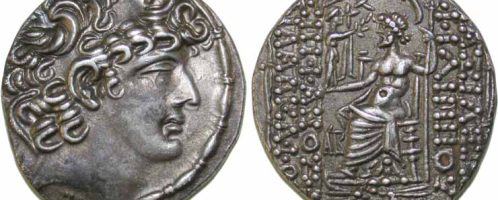
Gabiniani – this name was related to the group of Roman mercenaries fighting for Egyptian kings – Ptolemy XII and Ptolemy XIII. This term was derived from the name of the governor of Syria, Aulus Gabinius, who left in Egypt part of his troops participating in the recovery of the throne for Ptolemy XII.

Aulus Gabinius coin

Spelling error report

The following text will be sent to our editors: