If you have found a spelling error, please, notify us by selecting that text and pressing Ctrl+Enter.

Curiosities of ancient Rome (Ancient stories)

Ancient stories are curiosities revealing lesser-known, surprising, or unusual episodes from the world of ancient Rome and antiquity. This category includes short stories about events, people, and situations that don’t always make it into classical works, yet allow for a better understanding of the realities and mentality of the era.

Gladiator’s pernicious fame

Gladiator Spiculus convinced himself that life in grace is uncertain and changeable and that nothing lasts forever. He fought in the arena, he was the favourite of the emperor, he gained fame and enormous wealth, which every Roman certainly dreamed of, but it was this that ultimately led him to destruction.

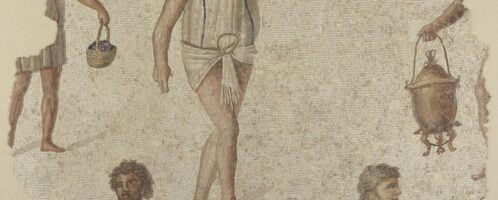
A vessel with gladiators

Example of racism in antiquity?

In ancient Rome, at the beginning of the day, there was faith in divination, good and bad omen announcing future events and superstitions. Such faith did not always end pleasantly for everyone, especially if a man was considered to be the evil sign that heralded the misfortune that would come.

Roman legionnaire from the 1st century CE

Crazy Emperor Caligula

Emperor Caligula was the first emperor who compared himself to god and called himself like that. What’s more, he allowed himself bizarre decisions, including appointing his horse a senator. About Caligula’s favourite horse (Incitatus, meaning “swift” or “at full gallop”) writes Suetonius in “About the Life of the Caesars”. According to the Roman writer, the animal had 18 servants who cared for it.

Caligula

Gladiator placed into corner

Gladiators were not only slaves, prisoners of war or criminals; they could also be free citizens of Rome, eager to gain wealth or the opportunity to win fame as a good warrior. However, there were cases when, paradoxically, the profession of a gladiator, among whom most were slaves, was one of the options not to become a slave.

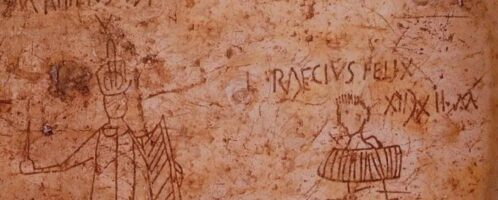
Graffiti of Marcus Attilius in Pompeii

Wandering of Gaius Marius

After the Social War that devastated Italy, in 88 BCE there was another major political crisis in the Republic between the two largest players of the world at the time, L. Cornelius Sulla and G. Marius. As a result of Rome’s capture by Sulla’s army, a completely lonely Marius had to flee the capital in the company of only a few of his slaves.

Gaius Marius

Mutiny of Caesar’s legionaries

Legio X Equestris was the most distinguished and respected unit under Julius Caesar. It served under his leadership in numerous campaigns, occupying the honourable right wing. After the subordination of Gaul in 48 BCE, a civil war broke out, in which Caesar could once again count on his faithful troops of the 10th Legion. However, the lack of awards promised by Caesar began to cause bitterness among the soldiers.

Caesar in battle

Respect before the power of Rome

Ancient Romans were famous for their extremely criminal and legionary Roman legionaries. On the battlefields they were confirming their strength and discipline. However, apart from strength, the Romans had one more argument – they were able to impose their will.

Picture showing Popilius drawing a circle around Antiochus IV. Image: Louis-Jean-François Lagrenée.

Geta and Caracalla – evil brothers

Geta and Caracalla were sons of emperor Septimius Severus. Both, according to the will of the dying father, were to share power in the Empire, without a clear division of powers and territory. This fact alone hindered cooperation between them. However, the deeper cause of the conflict that was about to break out between the brothers was the sincere hatred they had had since early childhood. They were not even prevented by the consent forced by their father’s grave, to which their mother Julia Domna urged her co-emperors.

Geta and Caracalla

Spelling error report

The following text will be sent to our editors: