If you have found a spelling error, please, notify us by selecting that text and pressing Ctrl+Enter.
Curiosities of ancient Rome
The world of the ancient Romans was rich in extraordinary, and sometimes even surprising, facts. We draw our knowledge of Roman daily life, customs, and mentality primarily from works left by ancient writers and historians. It is thanks to them that we discover information that is astonishing today – sometimes even hard to believe. Below are some interesting facts that reveal a lesser-known and less obvious side of the Roman world.
I encourage you to submit your own suggestions and to report any corrections or inaccuracies.
Roman wooden tablet from Vindolanda (No. 892)
Roman wooden tablet from Vindolanda (northern England) with the text of the message preserved. A plate was registered under the number 892. In ancient Rome, this type of plates were covered with wax and written with a special stylus. The preserved scratches on the wood allow the message to be recreated.

Roman saddle with preserved horns
Roman saddle with preserved horns, made of bronze. The object is dated to the 1st century CE and is on display at the Dominikanermuseum Rottweil in Germany. The horns were found at Fort I and II in Rottweil.

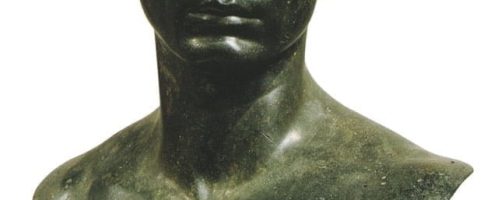
Relief showing crowned emperor Caracalla
Relief showing Emperor Caracalla crowned by Julia Domna (depicted as Victoria). The object dates from the beginning of the 3rd century CE; comes from Roman Syria. The object is located in the National Museum in Warsaw.

Relief showing praetorians
Relief showing praetorians. The artifact was once part of the Claudius arch in Rome, which was built in honor of the victories of the emperor in Britain. It is located in The British Museum.

Caesar’s reforms and map of contemporary Europe
Gaius Julius Caesar introduced many reforms, the effects of which are still felt today. Many people will think of the calendar at this point, but no less important was the decision to grant citizenship to the inhabitants of Pre-Alpine Gaul.
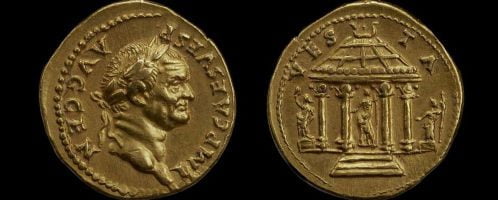
Roman gold coin of Vespasian
Roman gold coin (aureus) showing Emperor Vespasian on one side and the Temple of Vesta with four columns and three statues on the other.