Chapters
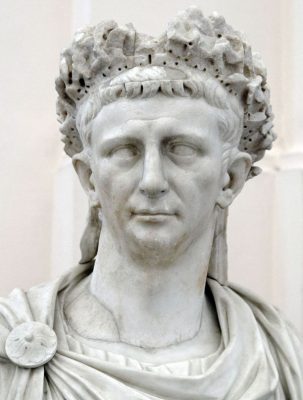
In 43 CE the newly elected emperor Claudius, wanting to legalize his rule, began an invasion of unclaimed Britain. Britain was also considered a particularly attractive land because of the many mines and slaves. The main commander of the operation was Aulus Plautius.
Background of events
The unsuccessful attempt to invade Julius Caesar in 55-54 BCE on Britain caused that for decades the idea of conquering the island was not taken or even considered. The situation on the continent in the last years of the life of Julius Caesar, after his death and during the reign of Augustus.
Conquest plans revived during the reign of Caligula (37-41 CE), but they were not implemented. Suetonius gave an interesting story in this matter an interesting story. The island eventually became the prey of Emperor Claudius, wanting to gain military credibility of his authority, undertook an expedition to Britain in 43 CE. Britain was also considered a particularly attractive land because of the many mines and many slaves. Another reason for the invasion was the shelter of Gallic rebel groups on the island – thus they remained unpunished against Roman rule.
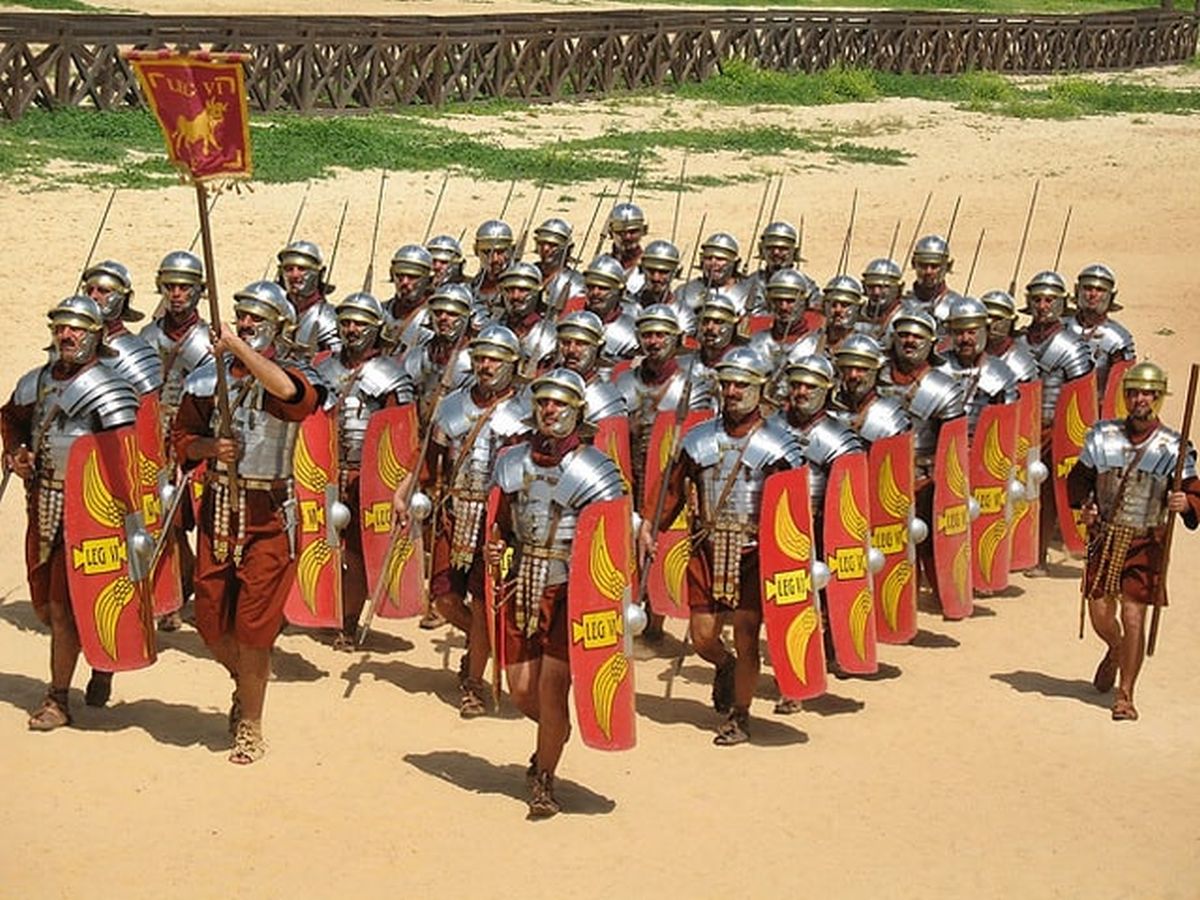
Officially, the reason for Rome’s aggression was the desire to bring the fugitive king of Atrebat to Britain, Veryka. Important forces were involved in the war. Four legions (IX Hispan, II Augusta, XIV Gemina and XX Valeria Victrix, plus about 20,000 auxiliary troops, including the Thracians and Batavians) became the Roman senator Aulus Plautius Silvanus. Aulus Plautius became the first governor of Britain in the abovementioned 43 CE. Other prominent politicians also took part in the invasion: II Augustus’s Legion was commanded by the future emperor Vespasian; brother of Vespasian – Titus Flavius Sabinus II; Gnaeus Hosidius Geta; and Gnaeus Sentius Saturninus.

The main striking force of the Romans divided into three parts. Boulogne was used as a place of reflection of the Roman fleet, while Rutupiae (now Richborough or the east coast of Kent1) was used. However, none of the locations listed is one hundred percent sure.
Togodumnus and Caratacus, sons of the deceased king Cunobelinus, who controlled the area in south-east England as the leader, led the British tribes resisting the Romans Celtic tribe Catuvellaunich. Major Brit forces encountered the Romans on the river at the place where it is now accepted to claim the city of Rochester. There was a battle on the Medway River that lasted two days. During the clash, one of the high-ranking Roman commanders – Gnaeus Hosidius Geta – was almost captured. Eventually, he managed to avoid defeat and contributed to the victory of the Romans, for which he was later allowed to take the triumph.
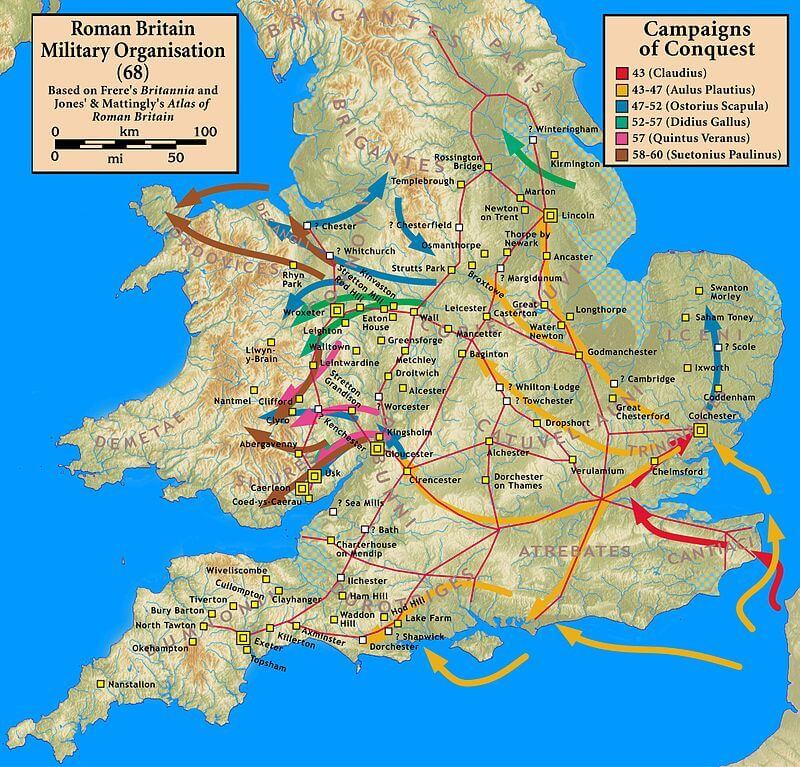
After the defeat, the Britons withdrew behind the Thames. The Romans chased the enemy into the river. Then came another riverside battle. The Romans launched an attack either on the existing bridge or on the newly built, which, however, was associated with large losses. It is certain that one of the auxiliary troops – the Batavian infantry – swam across the river as a special strike force. Shortly after the battle, Togodumnus died.
Plautius managed to capture the southern and central parts of Britain at the moment. The greatest resistance was encountered when trying to capture Camulodunum – the capital of the state of Cunobelinus. The Roman offensive stopped, and the commander made an official request to Emperor Claudius for help in further surgery. Cassius Dion tells us in his work “Roman History” that indeed Plautius was asking the ruler for support in suppressing the agitated army of barbarians. Suetonius, in turn, claims that Claudius did not actually fight a battle, but only because Plautius Silvanus had done the actual conquest on his behalf before.
Claudius eventually reached the island with adventures.
On the voyage thither from Ostia he was nearly cast away twice in furious north-westers, off Liguria and near the Stoechades islands. Therefore he made the journey from Massilia all the way to Gesoriacum by land, crossed from there, and without any battle or bloodshed received the submission of a part of the island […]
– Suetonius, Claudius, 17
The emperor, in order to increase the strength of his troops, took with him reinforcements and war elephants specially brought from Africa. The battles fought on the island quickly brought results, and after a few months – in 47 CE – the Senate guaranteed Claudius the right of triumph and Aulus an ovation. Of course, Claudius attributed himself to success, and as a symbol of victory “he set a naval crown on the gable of the Palace beside the civic crown, as a sign that he had crossed and, as it were, subdued the Ocean”.
The governor of Britain and its actual conqueror – Aulus Plautius Silvanus managed the southern part of the island from 43 to 47 CE. He founded the province, founded a colony of veterans in the captured Camulodunum and subdued the lands belonging to the Roman submissive king Cogidumnus. Thus, southern and central Britain came under Roman rule, the rest remained independent.
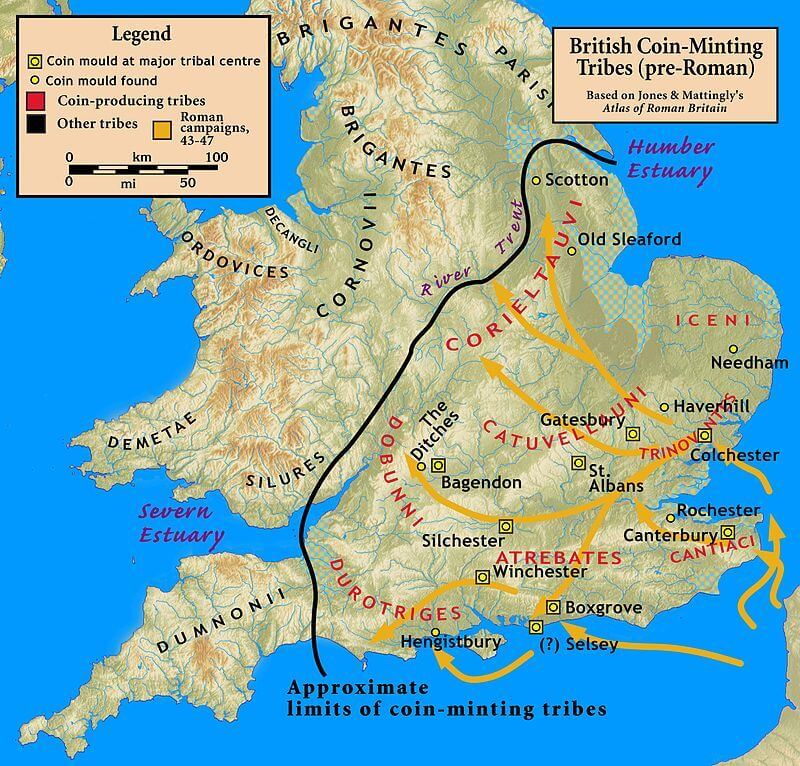
Military operations in the years 44-60 CE
After conquering the most valuable, from an economic point of view, lands of south-east Britain, some Roman troops – under the leadership of Vespasian – went west to conquer other lands and local centres, the so-called oppidi. Most likely, the leader with his legions reached Bodmin. Then the IX Hispana legion went alone north to Lindum Colonia (now Lincoln). Probably, within four years of the invasion, the Romans owned the area south of Humber to the Severn River.
With the assumption of governorship in Britain by Publius Ostorius Scapula, the next stage of hostilities began. Fights were fought for the areas of today’s Wales and the current so-called Cheshire plain. Scapula ultimately failed to conquer all the lands of the Silures tribe, but the Kang tribe of central Wales were conquered, reaching the Irish Sea. The main purpose of the Roman general was to capture the British commander Caradoc (the Welsh version of the name Caratacus) who fled to Wales after a defeat at the Battle of the Medway. In the year 50 CE, the Romans began another campaign in Wales against Britain. Caradac gathered 30,000 warriors from the Celtic tribes of Ordoviks, Deceangels, Demets, Komovs and Silurians. Briton troops took positions behind the Severn River, crossing the valley of the same name. About 22,000 Romans were against each other. The battle turned out to be victorious for the Roman army. In total, the battle took the lives of thousands of Britons, and members of the Caradoc family were also captured. He managed to escape from the battlefield again and take refuge in the mountains with local druids. The tribe he hid with turned out to be allied with the Romans. The local queen Cartimandua decided to release Caratacusa.
Soon, Ostorius died, and his place was taken by Aulus Didius Gallus, who largely did not extend the borders of the province. After the Roman throne was taken over by Nero, further actions were taken to conquer the island. Quintus Veranius Nepos became the administrator of Britain. He and his future successor in the position of Gaius Suetonius Paulinus conquered and destroyed the centre of druidism (banned by Claudius) on the island of Mona in 60 CE The occupation of Wales was postponed, however, because the Romans had to face a large the rebellion of British tribes, headed by a certain Boudicca. The uprising, though choked, forced the Romans to return to the east-south of Britain.
Military operations in the years 60-78 CE
The suppression of Boudica rebellion meant that subsequent governors conquered north. Only when Cartimandua, mentioned earlier, asked the Romans for help in defeating her husband Venutuius, did the Roman command decide to fight in the west. Quintus Petillius Cerialis headed the legions marched out of Lincoln and defeated Venutuius near Stanwick around the year 70 CE. In 74 CE, Cerialis was replaced by Sextus Julius Frontinus, who subordinated the Roman authority of the Silures tribe, established the legion of the II Augustus legion in Caerleon and built a whole network of camps in the lands of Wales. In 78 CE, Frontinus left office.
The conquest of Britain was never fully completed because the northernmost territories – the so-called Caledonia – was inhabited by the people of Picts who never succumbed to Roman domination. At the end of the first century CE, the war campaign in these lands (present-day Scotland) was led by Julius Agricola.