If you have found a spelling error, please, notify us by selecting that text and pressing Ctrl+Enter.
Curiosities of ancient Rome
The world of the ancient Romans was rich in extraordinary, and sometimes even surprising, facts. We draw our knowledge of Roman daily life, customs, and mentality primarily from works left by ancient writers and historians. It is thanks to them that we discover information that is astonishing today – sometimes even hard to believe. Below are some interesting facts that reveal a lesser-known and less obvious side of the Roman world.
I encourage you to submit your own suggestions and to report any corrections or inaccuracies.
Bust of Gaius Julius, grandson of Augustus
Roman bust of Gaius Julius, grandson and adopted son of Augustus and heir to the throne. The object is dated from 1-4 CE.

Carnelian showing artist at work
Magnificent Roman carnelian with the artist’s image while painting a woman’s bust. The object is dated to the 1st-3rd century CE and is only 1.2 cm long.

Reconstruction of kitchen in Roman bar
Interesting reconstruction of the kitchen in a Roman street bar (coupona or thermopolium), located in the Lugdunum museum in the French city of Lyon.


Infanticide in ancient Rome was accepted
In ancient Rome, infanticide was a common practice. A child’s first days in the world have always been uncertain; in antiquity, many children did not survive even a few days due to heavy childbirth, diseases and poor health. Hence, they waited to give a name to the child. At times, the child may have been deliberately rejected by the parents.

Provinces over the years
One of the compelling reasons for Roman supremacy in antiquity was the large-scale conquest and provinces of new lands. The concept of a province is derived from the Latin provincia, i.e. the responsibilities of the governor in charge of the new territory.

Was Marcus Junius Brutus “a man of honor”?
Marcus Junius Brutus is best known for being one of the killers of Julius Caesar. In the historical tradition, he is considered a defender of the Roman republic and republican values. It turns out, however, that he treated these values freely and selectively, depending on whether they actually served his interests.


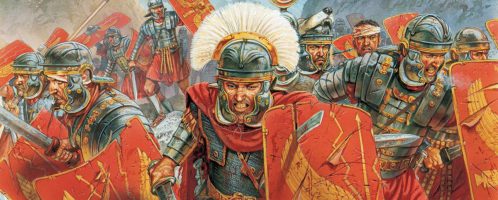
Who could serve in Roman legions?
Many fans of Roman films are astonished by the ideas of the producers that in the Roman army they placed soldiers from different continents. The rule was that only a Roman citizen could serve in the army, i.e. in the Roman legions. However, obtaining citizenship was not an impossible task.