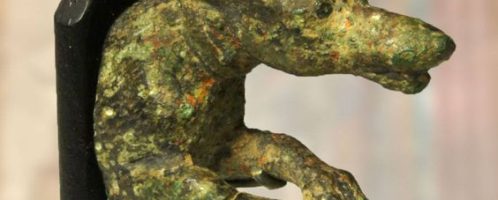
Perfectly preserved Roman dog-shaped handle
A perfectly preserved Roman dog-shaped handle. Dated to the 2nd century CE. Length about 7 cm.
If you have found a spelling error, please, notify us by selecting that text and pressing Ctrl+Enter.
The world of the ancient Romans was rich in extraordinary, and sometimes even surprising, facts. We draw our knowledge of Roman daily life, customs, and mentality primarily from works left by ancient writers and historians. It is thanks to them that we discover information that is astonishing today – sometimes even hard to believe. Below are some interesting facts that reveal a lesser-known and less obvious side of the Roman world.
I encourage you to submit your own suggestions and to report any corrections or inaccuracies.
A perfectly preserved Roman dog-shaped handle. Dated to the 2nd century CE. Length about 7 cm.
The persecution of Christians in ancient Rome – contrary to what is commonly believed – was not of a mass nature. In the 2nd and early 3rd century CE, no document was issued explicitly pointing to the deliberate persecution of Christ’s followers.

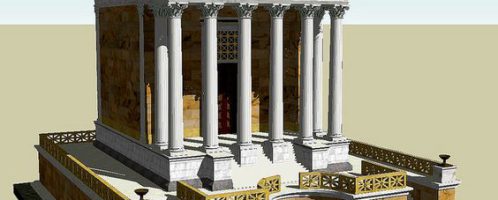
Reconstruction of the temple of divine Caesar (Templum Divi Iulii) at Forum Romanum, between the Region, the Temple of Castors and the Aemilian Basilica, where Caesar’s body was cremated and his testament read aloud by Mark Antony.
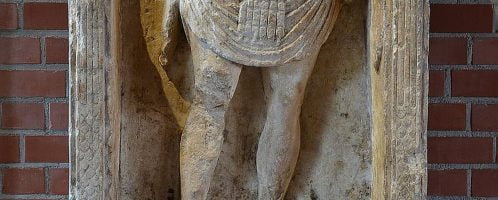
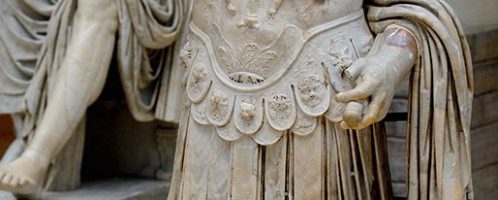
Statue showing the armored emperor Titus Flavius. The object is made of white marble and dates back to 79 CE.
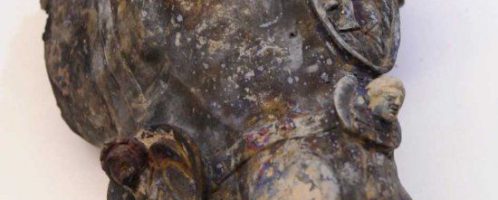
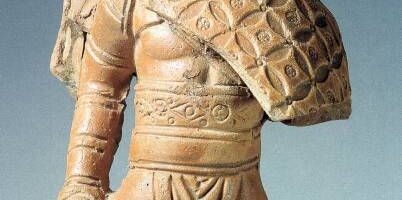
Roman small statuette depicting a gladiator. The object dates from the 1st century CE and shows the so-called “thrax”, who in the arena was usually armed with a short sword (broken here) and a small shield protecting the chest.
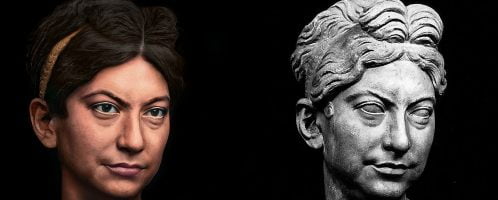
Reconstruction of the image of queen Palmyra – Zenobia. After the death of her husband Odenatus, thanks to skilful politics, she led to a strong expansion in the region and gained full power in the eastern territories of the Roman Empire. In practice, it ruled in the years 267-272 CE. Finally, she was defeated and her usurpation ended thanks to Emperor Aurelian in 272 CE.
Horse’s head from a Roman statue showing an equite on horseback. The sculpture was made of gilded bronze.