
If you have found a spelling error, please, notify us by selecting that text and pressing Ctrl+Enter.
Curiosities of ancient Rome
The world of the ancient Romans was rich in extraordinary, and sometimes even surprising, facts. We draw our knowledge of Roman daily life, customs, and mentality primarily from works left by ancient writers and historians. It is thanks to them that we discover information that is astonishing today – sometimes even hard to believe. Below are some interesting facts that reveal a lesser-known and less obvious side of the Roman world.
I encourage you to submit your own suggestions and to report any corrections or inaccuracies.
Fiorelli’s method – how were burnt bodies recovered from Pompeii?
The eruption of Vesuvius in August 79 CE was a powerful cataclysm. To this day, we can admire the remains of Pompeii inhabitants buried alive. And this is due to the brilliant method of Giuseppe Fiorelli.
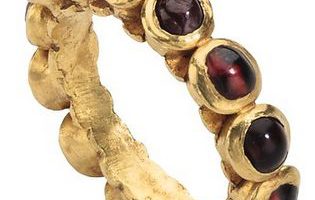
Late Roman gemstone ring
Late Roman gemstone ring. Dated to the 4th century CE; weighs about 5 grams.
Impressive ramparts in Roman fort Ardoch
Impressive ramparts in the Roman fort Ardoch, just outside the village of Braco in central Scotland. The camp was established around 82 CE during the Agricola campaign in Caledonia.

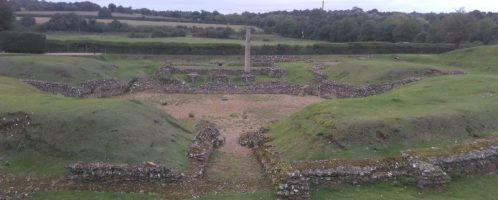
Theatre in Verulamium
Verulamium was the third-largest city in Rome in Britain. For some time it was even the provincial capital. Burned during the Boudica revolts, it regained its splendour in the following years, traces of which are still being discovered today. Many public buildings have been erected in the city, including Britain’s largest theatre.
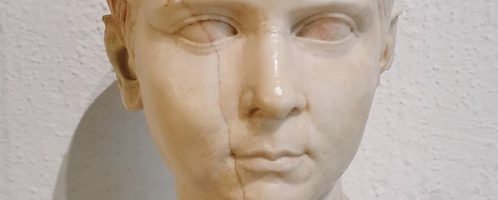
Discovery of bust of Lucius Caesar
The bust of Lucius Caesar (grandson of Octavian Augustus), which is housed in the Archaeological Museum in Cuenca (central Spain). The object was found during excavations in the forum of the ancient city of Ercavica.
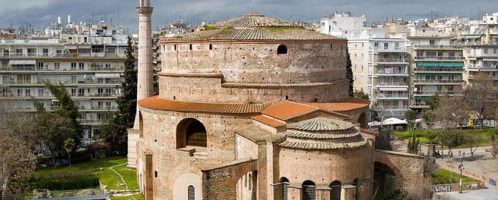
Ancient rotunda in Thessaloniki
Ancient rotunda in Thessaloniki, Greece, built in 306 CE by order of the Emperor Galerius, who was Caesar in the East, reigned by Diocletian. His domain was especially the Balkans.
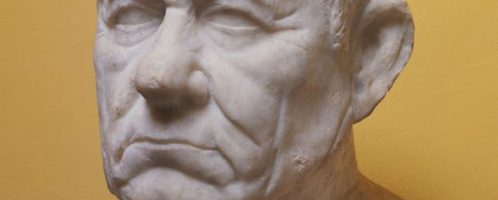
Realistic Roman bust of mature man
Realistic Roman bust of a mature man, dated 1st century CE. Object carved in marble; is in the collection of The Getty Museum (USA).
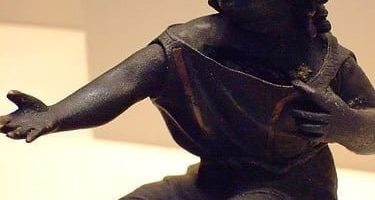
Roman piggy bank in shape of homeless girl
Roman piggy bank, made of bronze, in the shape of a homeless girl reaching for coins. Dated 25-50 CE.
Coin of Gaius Mamilius Limetano
Roman coin minted to honour the Mamilius gens, by Gaius Mamilius Limetano. The object is dated to the beginning of the 1st century BCE. The reverse of the coin shows the image of Odysseus, whom the family members considered their former ancestor.
