Chapters
Wars fought by the Roman Empire in the east until 117 CE.
Background of events
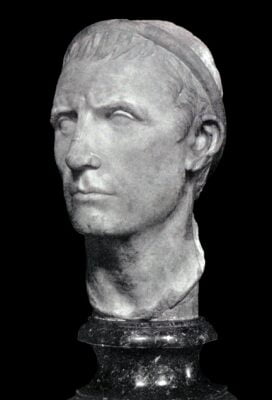
Countries in the eastern Mediterranean have developed since the fall of Alexander the great’s empire under the influence of Hellenistic culture. These lands were at a high civilization level and their inhabitants were not too interested in the “barbaric” western lands. Information about Romebegan to flow east after the city’s wars with Pyrrhus and the cities of Great Greecein the 3rd century BCE
The Hellenistic rulers became more interested in the new rising power from the west when, to their horror and surprise, the legions from the Tiber fighting in a new way crushed the Battle of Cynoscephalae in 197 BCE the troops of Philip V, ruler of Macedon, home of the invincible soldiers of Alexander the Great. The legions in the east showed their advantage over the Hellenistic armies in the Battle of Magnesia in western Asia Minor in 189 BCE, during the so-called Fourth Syrian War. The battle was fought by 2 legions and an auxiliary force of about 30,000 men under the command of Lucius Scipio with the army of Antiochus III about 72,000. The Roman army, formed by mass mobilization, consisted mainly of heavily armed legionaries, armed with short swords – gladius, daggers – pugio, spears – pilum, partially in spears – hasta, oval convex shields – scutum and covered with brown breastplates of various types, chain mail and steel or bronze helmets, was a universal formation for any type of terrain. The Seleucid army, on the other hand, consisted of variously armed formations, including heavily armed phalanxes, peltasts, light and heavy cavalry, war elephants with light troops, and many others. The largest formation of his army were the heavily armed phalanxes, sarissoforai, or carriers of saris, of which more than 50%. This static loading of the formation resulted in low mobility and flexibility of the grouping. The army of Antiochus III, although modelled on the army of Alexander the Great, differed significantly from it. Aleksander focused mainly on the mobility of the formation, which was the decisive role of heavy riding. In the Seleucid army, emphasis was placed on the sarissoforai formations, which were to outweigh the scales in a direct battle between the infantry and the infantry. In addition, Antiochus used mercenary troops, which, in a situation of an uncertain victory, usually surrendered the rear, not wanting to suffer excessive losses.
Under Magnesia Roman troops smashed the largest and most powerful Hellenistic army of all time. The last formation of Antiochus III’s army that remained on the battlefield was the phalanx, which proved to be still a formidable weapon. This victory did not entail any territorial acquisitions for Rome.
The first territorial acquisition of Rome in the east was the kingdom of Pergamum, bequeathed by Attalus III in his will to the Roman people in 133 BCE, then transformed into the province of Asia. Then the Romans began to expand their rule in this region, imposing fiefdom on neighbouring rulers, and then taking Cilicia. In 89 BCE, First War with Mithridates, King of Pontus. He quickly occupied Bithynia, the province of Asia and Cilicia, allied with Rome, and his leaders crossed over to Greece, inciting an anti-Roman uprising there. In 87 BCE Sulla appeared there, breaking up the Pontic army and capturing the rebellious cities. His army consisted of legions reformed by Marius at the end of the 2nd century BCE. They included only heavy infantry and small cavalry units. The cost of setting them up was borne by the state. All soldiers had roughly unified weapons and were all covered with chain mail, the best armour at the time. In 86 BCE, the Roman fleet entered the Aegean Sea, taking control of this reservoir and the cities lying on its shores. A year later, Sulla forced Mithridates to give up all existing territorial acquisitions, issue a fleet and pay 3000 talents in compensation. This victorious conflict strengthened the authority of the Roma city in the area.
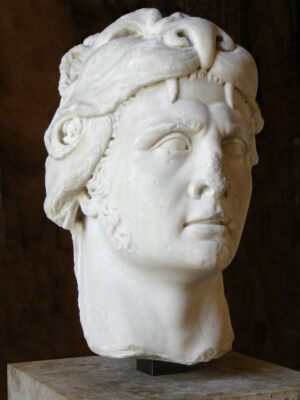
In 82-81 BCE there was the so-called Second War with Mithridates, unnecessarily triggered by Lucius Murena. This conflict ended in a status quo.
room
In 74 BCE the king of Bithynia, Nikomedes IV, passed away his state in a will to Rome. Mithridates immediately marched into Bithynia, because the execution of the will would deprive him of control over the straits leading to the Black Sea. He made a close agreement with Sertonius in Spain. Pirates ruling the seas were also their allies. In this situation, the Roman Senate sent both consuls to Asia: Marcus Aurelius Kotta and Marcus Licinius Lucullus. Immediately the praetor Marcus Antony (the father of the future triumvir) was given extensive prerogatives to fight pirates. Lukullus held the supreme command in Asia Minor for 8 years to 66 BCE. The first victory was achieved at the very beginning by defeating the Pontic fleet in the Battle of Lennos. In 73-70 BCE he dislodged Mithridates from Pontus, forcing him to flee to Armenia to King Tigranes. In 69 BCE Lukullustook its capital Tigranocert. However, both rulers managed to avoid captivity.
The revolt in the Roman army caused by the prohibition of looting and rape led to the halt of the offensive, and later also to a slow loss of the territories conquered so far. In 66 BCE he commanded Gnaeus Pompey, who had been commanded in a war against pirates a year earlier, which he had dealt with in six months. As a result of the aggression on Crete, which started during this war, it became a Roman province. Receiving command in the war with Mithridates, he made an alliance with the Parthians and thus in 66 BCE displaced Mithridates from all the lands he occupied and forced his allies to surrender. He organized new provinces from the newly conquered lands: Pont, Bithynia and Paphlagonia. Then he moved to the east, where he was stopped only by heavy fights with local tribes at the foot of the Caucasus. He then went south, occupying Syria in 64 BCE and liquidating the Seleucid state. That same year, he took Jerusalem during the Judean Civil War. He returned the city and the whole country to Hirkan (II), whom he made dependent ruler, as he did in Galatia, Cappadocia and Commagene. In Judea, it was the first meeting with the Jewish world, its culture and religion. After the conquest of Jerusalem, Pompey entered the great temple, not knowing that it would be considered a great sacrilege. This act influenced further Roman-Jewish relations. A year later he left the East and returned to Rome.
The first diplomatic contacts with Parthians were made in 95 BCE by Sulla, establishing the limits of influence on the Euphrates. In 54 BCE he came to Syria Marcus Licinius Crassus, who, as part of the informal division of power in the empire (the first triumvirate) between him, Gnaeus Pompey and Gaius Julius Caesar, had received the consul and governorship of this province a year earlier. Willing to win the laurels of victory, he began preparations for an unprovoked invasion of the Party. It took him several months to concentrate the army and provide supplies. His army consisted of over 40,000 infantry and a small cavalry unit. The Parthians deployed about 10,000 horsemen, including about 1,000 cataphracts and 9,000 horse archers against this army. The Roman cavalry could not provide effective protection of its own army against the much more numerous enemy cavalry using the tactics of guerrilla warfare. The Parthians suddenly approached the Romans at a distance of a bow, flooded them with missiles and then retreated. Smaller groups of Romans in pursuit were beaten to the feet by heavily armed cataphracts or archers. Two days after crossing the border on the Euphrates in the Battle of Carrhae, Roman troops were crushed and Crassus killed. Very few legionaries managed to return across the Euphrates. All legion markings were lost during this expedition.
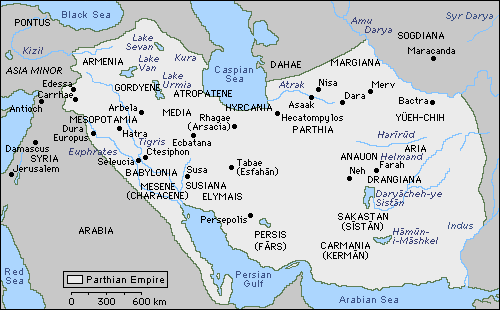
As part of the division of the empire’s spheres of influence after the death of Caesar, between Octavian and Antony (although also Lucullus, but he did not count in this game and he held Africa) in 40 BCE the latter fell to the East. With the support of the Queen of Egypt, Cleopatra, he began preparations for an expedition against the Parthians. He wanted to become a great conqueror and avenger of the defeat of Crassus and the loss of the banners. To do this, while in Antioch, he gathered a huge army, numbering about 100,000. The expedition of 36 BCE ended in a devastating defeat for the Romans, with losses reaching over 20%. Antony, like Crassus, did not provide the army with adequate cavalry cover, and the Parthians, using the same fighting technique, decimated his army less than 20 years earlier. Part of the army, however, was saved by leading a retreat through the mountains of Armenia, where the tactics of horse archers were not very effective. Antony made up for this defeat two years later by placing a pro-Roman ruler on the throne of Armenia. In the same year, he triumphed in Alexandria and was nicknamed Armenicus.
In 30 BCE, after at Actium and the subsequent suicide of Cleopatra and Antony, Octavian Augustus took Egypt and made it a Roman Provinceunder his direct authority. The new ruler changed the policy towards the eastern power. Taught by the defeats of Crassus and Antony that the Parthians were formidable opponents, he never decided to go on his own. He was content with his diplomatic successes. He grouped significant Roman forces on the Euphrates and began negotiations with the Parthians torn by civil war. In this way, without a fight, he regained the legionary marks of Crassus’ army, taken from the Parthians on May 12, 20 BCE by Tiberius and Roman prisoners from both unsuccessful expeditions. He was also placed on the throne of Armenia favouring the Romans Tigranes. In 25 BCE Roman troops conquered previously vassal Galatia and in 6 CE Judea was annexed.
After Augustus’ death, his immediate successors mostly maintained peaceful relations with their neighbours, interwoven with hostile conflicts. In 17 CE, Germanicus, on the order of Tiberius, annexed Cappadocia and Commagene, which at times returned to the power of his native dynasty and was permanently incorporated into the empire only by Vespasian in 72 CE
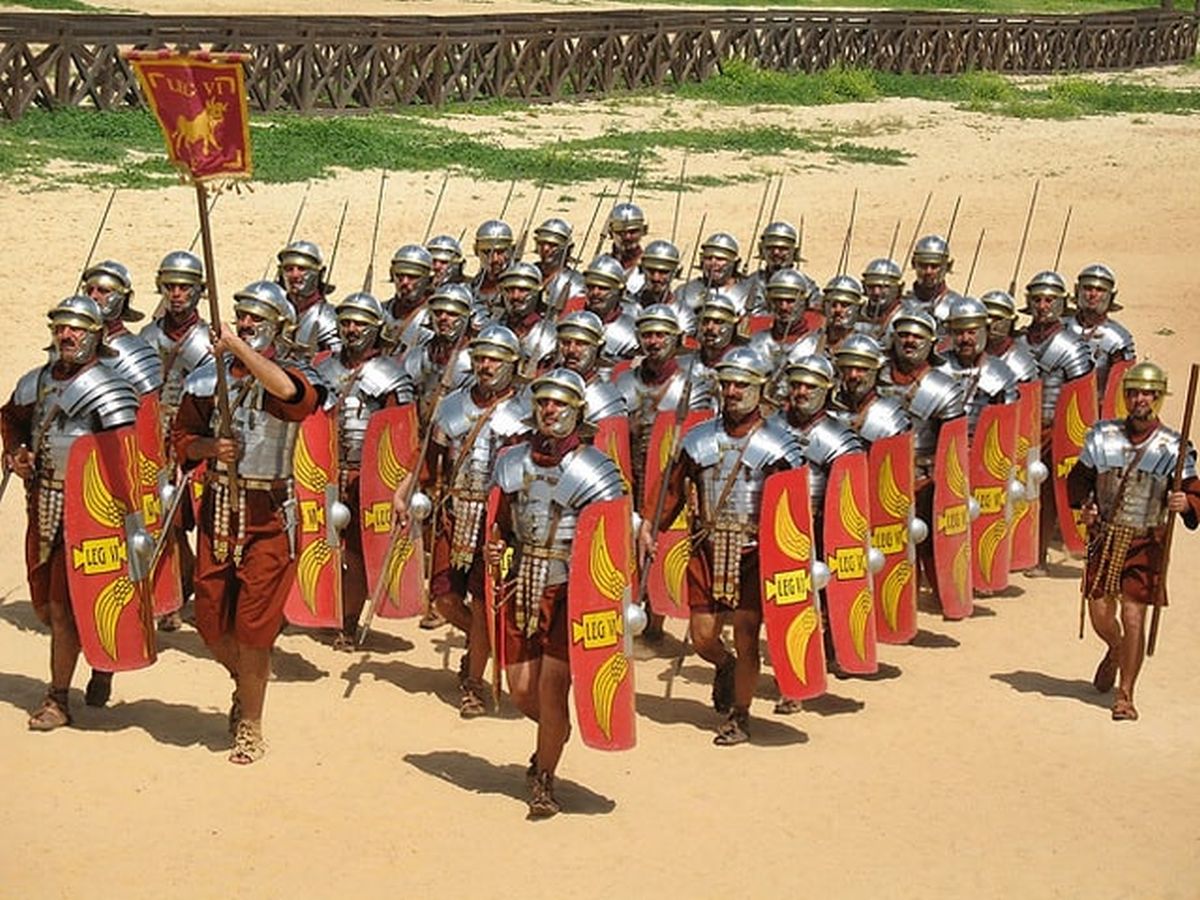
In the first century CE, new models of weapons were introduced to the Roman army, a rectangular shield, a steel segmented breastplate and a new type of helmet called Gallic-Imperial. This new weaponry spread the fastest in the eastern armies, as the new armour was better protected against the arrows of mounted archers, and the new type of shield and helmet was also better protected against cuts and thrusts from the top of the heavy eastern cavalry – cataphracts. In the West, the new weapons did not spread so well, because the fighting method and the opponents, and thus the equipment requirements, were completely different.
During the 1st century CE, battles with the Parthians were fought mainly in Armenia. More serious clashes took place during the reign of Nero but were settled diplomatically. Under Nero, the eminent commander, governor of Cappadocia, Gnaeus Domitius Corbulo invaded Armenia and placed on her throne the ruler of Tigranes, favouring the Romans. Unfortunately, the latter exposed himself to the Parthians by invading Mesopotamia, after which he was removed and Corbulo replaced Tiridates, brother of the Parthian king.
The Roman-Parth War for Armenia (58-63 CE)
The menacing Jewish uprising in Judea in 66 CE also broke out in 66 CE Titus Flavius Vespasian. In 67 CE, at the head of 50,000 soldiers, he began to regularly regulate the points of resistance. These operations were completed in 73 CE by the son of Vespasian, Titus, as he was proclaimed emperor in CE 69. The last point of resistance of the insurgents was the Masada fortress. Located at the top of the hill, it was accessible only from the side of a narrow path. Provided with food and cisterns full of water, it was a perfect, unconquered point of resistance for several hundred defenders. The Romans raised over one legion against such small forces. With a shortage of water and food, which had to be brought from considerable distances, the siege was carried out for nearly three years. The Romans stormed the fortress along a huge ramp. It turned out then that the defence lawyers had committed mass suicide.

The next military action in the east comes during the Marcus Ulpius Trajan (98-117 CE). After dealing with the Dacian threat in Europe, he moved military operations to the east. On his command, in 106 CE, Cornelius Palma took the Nabatean state. In 114, Trajan took advantage of internal disturbances in Armenia and the Party. At the head of an army of over 100,000, he entered Armenia, which he captured without much resistance and declared it a Roman province. In the spring of the following year, he set off for Mesopotamia. He took over two major cities, Nisibis and Edessa, and fought several skirmishes with local armies. He created the province of Mesopotamia, and after building a fleet on the middle Euphrates, he broke into Media Adiabene and took Ctesiphon. From this land, the province of Assyria was created. Then Trajan assumed the nickname “Parthicus”. The emperor continued on the Tiger to the Persian Gulf and then visited Babylon. However, he did not manage to properly organize and secure the new gains, as numerous uprisings broke out in the occupied cities. In addition, the inciting of revolts by the Jews, first in Cyrenaica and Egypt, and then also in Judea, in the immediate vicinity of the Roman army, posed a serious threat. The Roman army was on the defensive. Trajan then used the conflicts in the Arsacid family again and placed Parthamiziris, the son of the outgoing king Chosroes, on the party throne. The latter, however, deprived of sufficient Roman support and hated by his own subjects, was soon exiled. The emperor then suffered a defeat at the walls of Hatra, which, due to its location on a steep hill and mighty walls, was never conquered by the Romans. Then, after a dramatic return, the emperor reached Cilicia, where he died on August 8, 117 CE.
Rome set its foot in the east in the 2nd century BCE and stayed there until the end of antiquity. Until he was expanding his ownership in this area until the 2nd century CE. Despite many successive expeditions against the Parthians, and later the Persians, in the following centuries they did not bring permanent territorial acquisitions. Thanks to contacts with the East, Rome was able to draw on its cultural heritage and its established patterns. Many areas have developed widely thanks to this, including the Roman army would have a different shape without the upgrades and weapons from the east. It was under the Eastern influence that heavy cavalry was introduced into the Roman army, cataphracts. It was also from here that the Romans took over the method of making composite bows, which then spread throughout the empire. The Roman period is the only period in history when this weapon was so widespread in Europe. The Romans also introduced many Eastern patterns into their military architecture.

I decided to close my job under Trajan for many reasons. First, during his reign, the Roman Empire reached its maximum territorial expansion. Secondly, it was during his reign that the Roman state reached the peak of its military power. More than once in history, the Romans still deployed huge armies, but under Trajan it had the best quality composition, using all known weapons and military formations. Moreover, the Romans did not achieve such great success in the East, and their wars in this region did not bring any major changes.