If you have found a spelling error, please, notify us by selecting that text and pressing Ctrl+Enter.

Articles (Politics and events)

Politics and Events is a category dedicated to the key processes, decisions, and events that shaped the history of ancient Rome. Here, you’ll find articles on the formation of the Republic and Empire, political struggles, reforms, conspiracies, and key historical events that shaped the fate of the Roman Empire. The articles explore both high-level politics and pivotal moments in Roman history, placing them within their broader social and historical context.

Secessio plebis

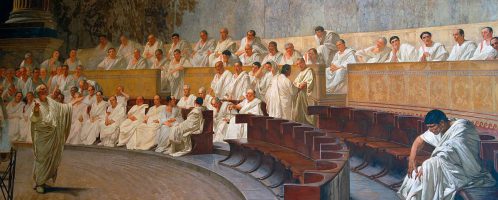
Ancient Rome from the beginning of its existence consisted of two social layers – patricians and plebeians; higher and lower state respectively. Lack of influence on state decisions and the use of plebe by patricians led to the so-called secessio plebis that took place five times in Rome’s history.

B. Barloccini, Plebeian Secession

Roman triumvirates

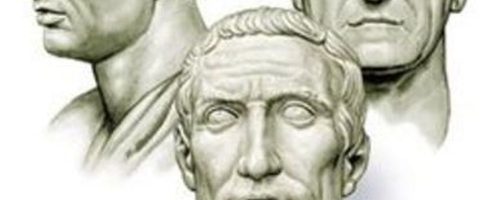
In ancient Rome, the term “triumvirate” (from trium viri – “three men”) was used to describe a college made up of three officials elected to perform certain tasks. Two such meetings have gone down in the history of Rome. Both took place during the so-called crisis of the Roman republic and decided about the division of power between influential politicians. In fact, these were agreements bypassing the senate, which was losing its prerogatives.

Three influential politicians: Pompey, Crassus and Caesar 

Roman war fleet

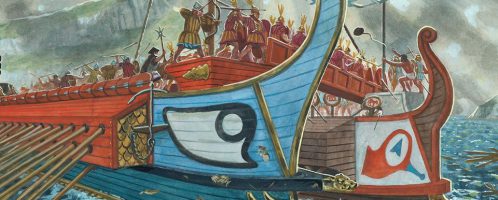
The construction of the ship began with the construction of the hull plating from boards, usually pine. Then a light skeleton was placed inside and the whole structure was reinforced with thick ropes. Boards were connected with specially hewn pins or grooves, practically no nails or other metal fasteners were used.

Clash of the roman fleet | Photo: Giuseppe Rava from Osprey's book, The  Ships of Republican Rome

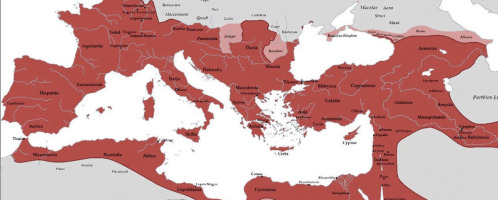
Roman Empire at time of its greatest prosperity

Roman Empire, expanding from the 3rd century BCE to the 5th century CE, was one of the few in ancient history that covered such a huge area. It is also sometimes called a world state for this reason. In the first and second centuries, the Romans ruled huge areas around the Mediterranean Sea. This huge state can only be compared with the Chinese state during the Han dynasty (202 BCE 220 CE) and the former state of Emperor Szy-Huang-Ti.

Roman Empire in 117 CE, At the end of Trajan's reign, Rome reached its peak territorial extent.

Year of the Four Emperors

The despotism of Nero caused growing dissatisfaction. The reign of Nero is stuck in the consciousness of his people today as a period of exceptional decline in morality, the oppression of society, and the eccentric pranks of the emperor. From a person sensitive to beauty, poetry, and theatre, he became a vain lust.

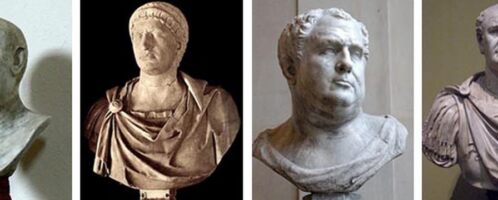
Rivals to imperial power: Vitellius, Otho, Vespasian and Galba

Year of the Five Emperors

Year 193 CE is known in the history of ancient Rome as The Year of Five Emperors, because during these 365 days as many as five claimants claimed the throne. This year also brought the fall of the current Antonin dynasty (96 – 192 CE) and the beginning of the four-year period of civil wars (193 – 197 CE), which eventually ended with the victory of Septimius Severus.

Year of the Five Emperors

Spelling error report

The following text will be sent to our editors: