If you have found a spelling error, please, notify us by selecting that text and pressing Ctrl+Enter.

Curiosities of ancient Rome

The world of the ancient Romans was rich in extraordinary, and sometimes even surprising, facts. We draw our knowledge of Roman daily life, customs, and mentality primarily from works left by ancient writers and historians. It is thanks to them that we discover information that is astonishing today – sometimes even hard to believe. Below are some interesting facts that reveal a lesser-known and less obvious side of the Roman world.

I encourage you to submit your own suggestions and to report any corrections or inaccuracies.

Dedication of Temple of Juno Moneta

On June 1, 384 BCE the saviour of Rome Marcus Furius Camillus announced the construction of a temple Junons Coins. The building was dedicated in 344 BCE. on the northern hill of the Capitoline Hill, where, according to tradition, the house of Manlius Capitolineus once stood1, and even earlier probably the castle (arx) of the kings. The nickname Moneta means Warning, Advising, from the Latin word monere.
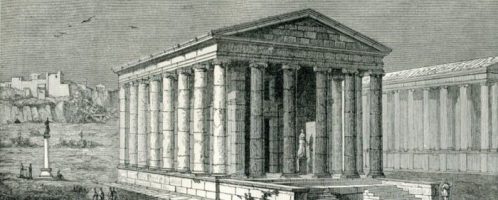
Temple of Juno Moneta

Roman theater in Epomanduodurum

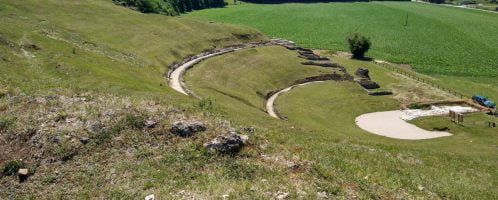
Roman theater in Epomanduodurum (now Mandeure, in eastern France). Object dated to the 1st century CE. The theater could accommodate from 15,000 to 18,000 viewers in total.

Roman theater in Epomanduodurum

Forgiving Octavian Augustus

It is said that one time Octavian Augustus removed an official from his position. He asked him for a financial donation, justifying it as follows: “My point is that it would seem that I voluntarily resigned from office and received a gratification from you for it”.

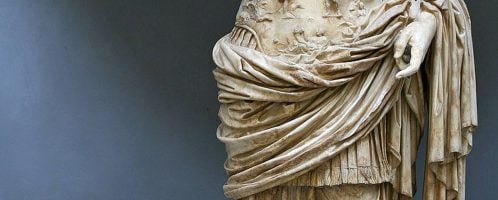
Statue of Octavian from Prima Porta

Roman bridge in Merida

A preserved Roman bridge (Puente Romano) in Merida, over the Guadiana River, Spain. The object was built in the 1st century CE, it was built on the Guadiana River in the 1st century. During the following centuries, it was rebuilt or restored; however, it has retained its original appearance. The bridge is used by pedestrians to this day.

Roman bridge in Merida

Pliny the Elder on hippos

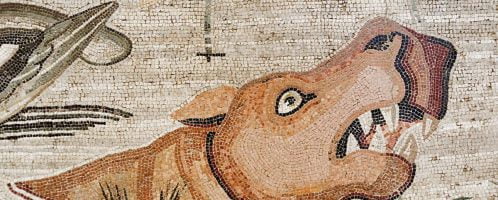
As we read in the message Pliny the Elder, the Egyptian Nile River gives birth to large creatures, among whom he lists hippos. According to the Roman researcher, the skin of the animal is very durable and is used to create shields and helmets. However, when the skin is properly soaked, its durability decreases.

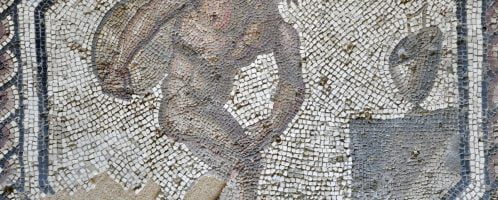
Hippo on the Roman mosaic

Water or wine?

The censor Lucius Aurelius Cotta did not shy away from wine. During his tenure in 64 BCE Cicero applied for a consulate. A famous Roman orator was once thirsty for a drink of water. As his friends were standing around, he indulged in a joke:

Woman with a jug on the Roman mosaic

Spelling error report

The following text will be sent to our editors: