If you have found a spelling error, please, notify us by selecting that text and pressing Ctrl+Enter.

Curiosities of ancient Rome

The world of the ancient Romans was rich in extraordinary, and sometimes even surprising, facts. We draw our knowledge of Roman daily life, customs, and mentality primarily from works left by ancient writers and historians. It is thanks to them that we discover information that is astonishing today – sometimes even hard to believe. Below are some interesting facts that reveal a lesser-known and less obvious side of the Roman world.

I encourage you to submit your own suggestions and to report any corrections or inaccuracies.

Roman mosaic in villa La Olmeda

Roman mosaic in the villa of La Olmeda in the province of Palencia, Spain. In Greek and Roman culture, a single swastika was extremely rare. She is more often seen in groups. This sign was used throughout the Empire, whether clockwise or counterclockwise, on the mosaics decorating the walls and floors.

Roman swastika

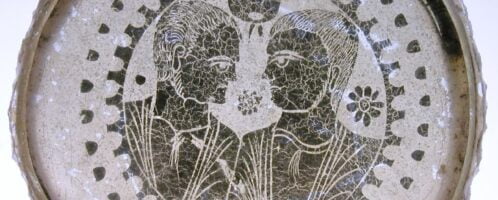
Base of Roman bowl

Base of a Roman bowl with two figures painted on it. Object dated to the 3rd-4th century CE; the artifact is on display at The Metropolitan Museum of Art in New York.

Base of Roman bowl

Signet ring with likeness

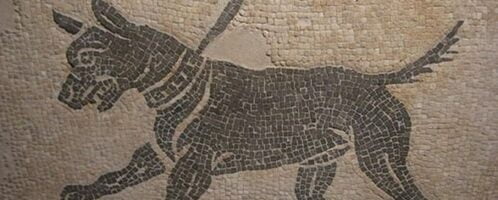
Emperor Augustus wore a signet ring with his own likeness on his finger. His successors continued the tradition, wearing it on their fingers as a memento of the great ruler. The exception was Galba, who wore a signet ring on his finger showing a dog peeking out from the bow of a ship. This emperor changed the custom because he had an extremely devoted dog.

Dog on mosaic

Stingy Vespasian

Emperor Vespasian was extremely stingy. This feature may seem bizarre and preposterous, considering that during his reign, construction began on the largest and certainly the most expensive public structure – Colosseum. Vespasian was once criticized for his excessive parsimony by an old shepherd who asked him for deliverance.

Vespasian

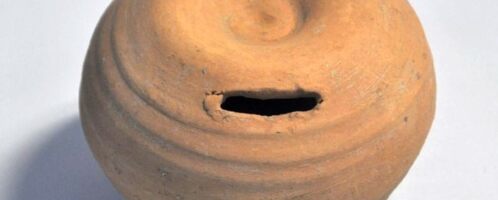
Roman piggy bank

Romans also knew how to save. Proof of this is a Roman piggy bank found in Viminacium, a Roman city and fort in Moesia (present-day Serbia).

Roman piggy bank

Roman portrait of Alexander Severus

Roman portrait of Alexander Severus, also known as Alexianus Bassianus, who was the last emperor of the Severan line. On the throne of Rome, he succeeded his cousin Elagabalus, who died as a result of a conspiracy. The reign of Alexander Severus marks a new period in the history of Rome – a crisis of the third century – almost 50 years of civil wars, invasions and economic collapse. He was murdered by his own rebel soldiers in 235 CE.

Alexander Severus

Spelling error report

The following text will be sent to our editors: