If you have found a spelling error, please, notify us by selecting that text and pressing Ctrl+Enter.

Curiosities of ancient Rome

The world of the ancient Romans was rich in extraordinary, and sometimes even surprising, facts. We draw our knowledge of Roman daily life, customs, and mentality primarily from works left by ancient writers and historians. It is thanks to them that we discover information that is astonishing today – sometimes even hard to believe. Below are some interesting facts that reveal a lesser-known and less obvious side of the Roman world.

I encourage you to submit your own suggestions and to report any corrections or inaccuracies.

“Phalangarii” of Emperor Caracalla

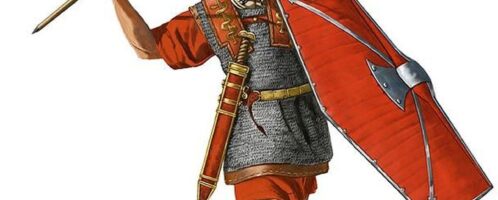
The son of Septimius Severus, Marcus Aurelius Antoninus, known by the nickname Caracalla, after the Gallic coat he willingly wore, was greatly fascinated by the figure of king Alexander III of Macedon. His fascination was so great that from what the historian Cassius Dio described, he created troops of legionaries, who not only referred to the formation of troops of the conqueror of the Achaemenid Empire with the name phalangarii, but were also recruited from the territories of Macedonia and Thrace, and even their armament was supposed to imitate Macedonian ones (wearing cloth armour and using long spears).

Legionaries from the 3rd century CE

Domitian’s disobedience

Domitian was nearly 18 when his father was proclaimed emperor by the legions in the east, and his brother Titus suppressed the Jewish uprising. For several months before his father came to the capital, the young member of the imperial line became the de facto master of the capital.

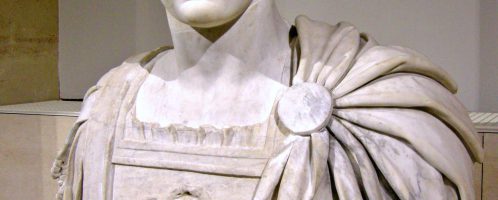
Domitian

Pears in Roman cuisine

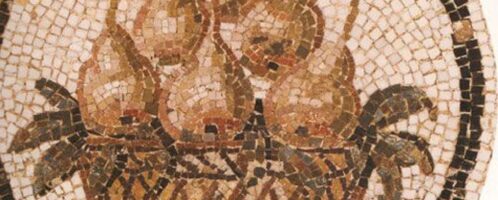
Pears were known and used in ancient Rome. Pliny the Elder states that there were 41 known varieties of pear, each of which had a different taste, appearance and name. They were known, for example “Tiberian”, from the name of Emperor Tiberius, or “Falernian”, from the Falernum wine, known for its sweet taste.

Roman mosaic showing pears

Roman attempt to conquer kingdom of Sheba

In 25 BCE Egypt’s prefect Gaius Aelius Gallus began a military expedition to subjugate Rome to the Arab kingdom of Sheba. It was located on the territory of modern Yemen, and therefore was an ideal territory from which to conduct maritime trade with countries on the Indian Peninsula.

Roman legionary from the 1st century BCE

Mithridates VI – victim of Roman imperialism?

In Roman sources, Mithridates VI Eupator appears to us as the leader of the wars that the Romans had to wage for about 25 years in the East. Mithridates was to strive to create a regional power from Pontus and displace Roman influence from the territories of present-day Turkey. But can we really speak of Mithridates as an aggressor, or rather a victim of Roman imperialism?

Asia Minor before the outbreak of the war with Mithridates VI

Lex Annalis – regulation of cursus honorum

Lex Annalis was the law which decisively regulated the order of office (cursus honourum) in the Roman Republic. Moreover, it set the minimum age that a Roman citizen must have had to apply for a questorship. The requirement was 26 years of age and 10 years of military service.

Gaius Gracchus summoned by the senate, Pierre-Nicolas Brisset

About Lucius Licinius Lucullus

Lucius Licinius Lucullus (117 – 56 BCE), is a somewhat forgotten figure. He lived in interesting times, which is why many mentions of him have been preserved by various authors. A great commander, and at the same time a person who was unable to win over the soldiers. This is how Cassius Dio characterized him in his “Roman history”:

Roman general Lucullus

Spelling error report

The following text will be sent to our editors: