If you have found a spelling error, please, notify us by selecting that text and pressing Ctrl+Enter.

Curiosities of ancient Rome (People)

Interesting facts from the world of ancient Romans. The world of ancient Romans was full of amazing accounts and information.

Cincinnatus – role model

For hundreds of years in Rome and around the world, a model of civic virtue was one Lucius Quinctius Cincinnatus (“Curly”), also known as Cincinnatus. He was a patrician and Roman consul in 460 BCE. In 458 BCE he was proclaimed dictator of Rome by the Roman Senate during the war with the Aequi people. According to legend, the senate made the choice while Cincinnatus was ploughing the field.
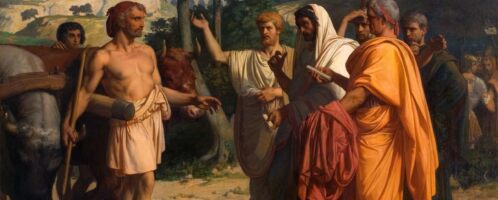
Cincinnatus Receiving Deputies of the Senate, Alexandre Cabanel

Apollodorus of Damascus

Living at the turn of the 1st and 2nd centuries CE, Apollodoros of Damascus was one of the most famous architects of antiquity. He worked for Emperor Trajan, for whom he was extremely useful, e.g. during the so-called Dacian Wars – designed a bridge that was thrown over the Danube to enable the Roman legions to cross the river. In addition, he designed the Trajan’s Forum, the emperor’s triumphal arches in Benevento and Ancona, perhaps he participated in the creation of one of the wonders of ancient architecture – Pantheon1.

Apollodorus of Damascus

Caligula’s disease

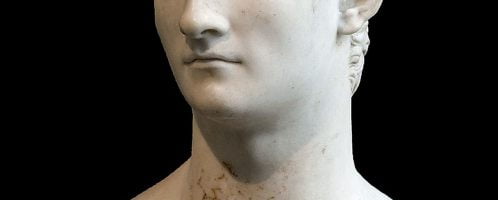
Most historians agree that epilepsy is the most likely candidate for Caligula’s disease. There are several details in Caligula’s biography that support this argument. It is suggested that members of Julius’ family suffered from epilepsy. Additionally, several historians point out that during his childhood, Caligula had episodes of sudden falls during which he lost consciousness and had difficulty staying upright. Analyzed from a modern perspective, these episodes may indicate atonic seizures.

Caligula

“Phalangarii” of Emperor Caracalla

The son of Septimius Severus, Marcus Aurelius Antoninus, known by the nickname Caracalla, after the Gallic coat he willingly wore, was greatly fascinated by the figure of king Alexander III of Macedon. His fascination was so great that from what the historian Cassius Dio described, he created troops of legionaries, who not only referred to the formation of troops of the conqueror of the Achaemenid Empire with the name phalangarii, but were also recruited from the territories of Macedonia and Thrace, and even their armament was supposed to imitate Macedonian ones (wearing cloth armour and using long spears).

Legionaries from the 3rd century CE

Mithridates VI – victim of Roman imperialism?

In Roman sources, Mithridates VI Eupator appears to us as the leader of the wars that the Romans had to wage for about 25 years in the East. Mithridates was to strive to create a regional power from Pontus and displace Roman influence from the territories of present-day Turkey. But can we really speak of Mithridates as an aggressor, or rather a victim of Roman imperialism?

Asia Minor before the outbreak of the war with Mithridates VI

Spelling error report

The following text will be sent to our editors: